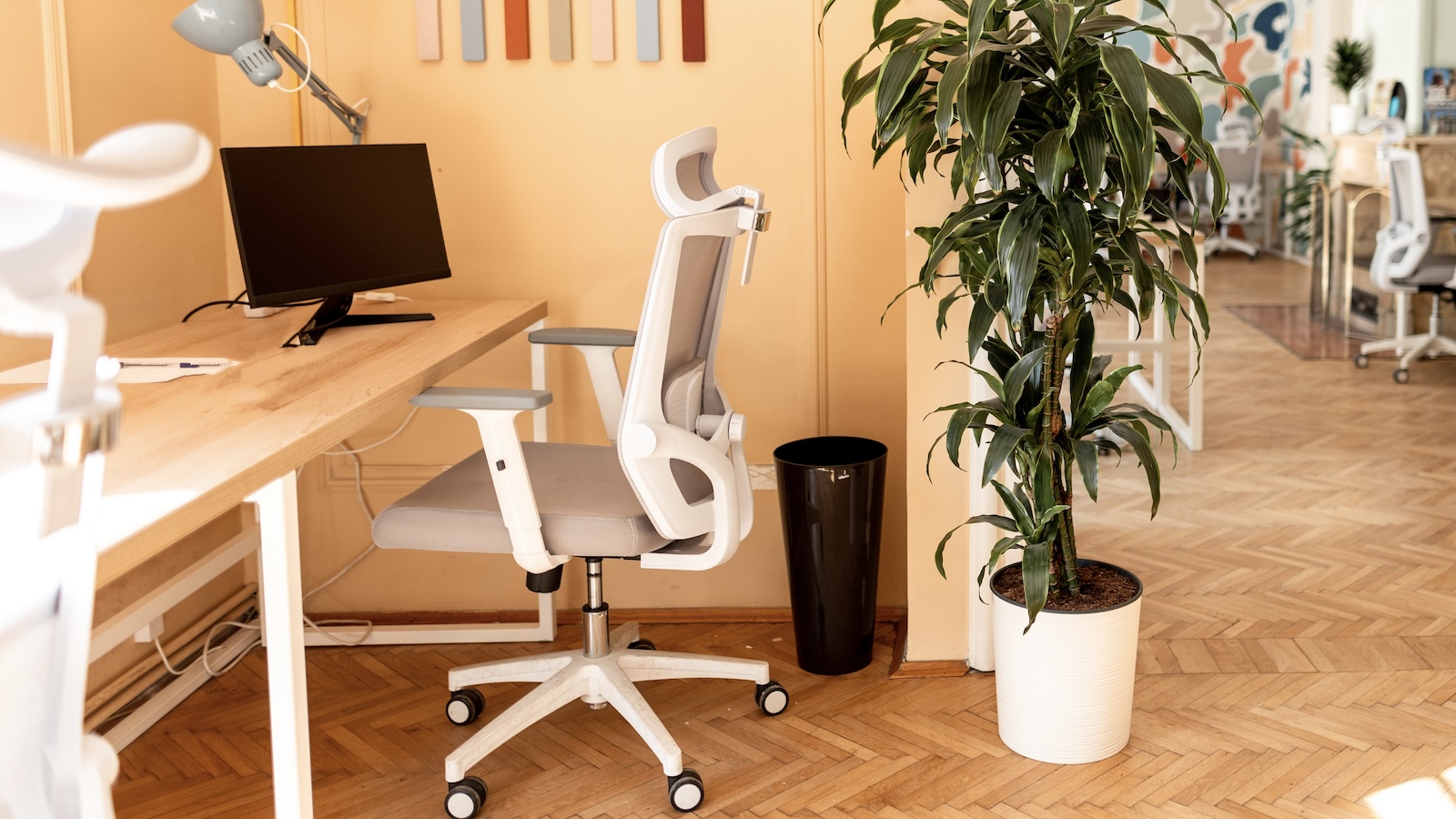

Back pain from desk work is one of the most common complaints doctors hear. And while people tend to blame their posture, the chair itself is often the biggest problem. Finding the right ergonomic office chair means knowing what to actually look for.
We asked Vijay Yanamadala, MD, a neurosurgeon with Hartford HealthCare’s Ayer Neuroscience Institute, to break it down.
“The best setup is the one that lets you change positions easily, not the one that locks you into a single ‘perfect’ posture,” says Yanamadala.
Seat depth is the fit problem most people miss
The gap between the back of your knee and the edge of the seat should be about two to three fingers wide. If the seat is too deep, it pushes you into a forward lean and you end up slouching.
“Seat depth is the most common fit problem I see,” Yanamadala notes. “Most people don’t even know to check it.”
When shopping, look for a chair with adjustable seat depth so you can adjust it to your body.
> Related: 6 Bad Posture Habits That Are Hurting Your Spine
Lumbar support should move, not just exist
A fixed lumbar bump is an awkward fit for almost everyone. What you want is lumbar support that adjusts in both height and depth so it actually meets your lower back where it curves.
“A fixed lumbar curve is designed for an average position that doesn’t really exist,” Yanamadala explains. “Adjustability is the whole point.”
A chair that lets you customize your lumbar support is worth considering. This is what separates a well-designed ergonomic office chair from one that just looks the part.
> Related: 6 Ways to Improve Your Posture at Work
The correct seat height keeps your hips, knees and feet properly aligned
The right seat height puts your feet flat on the floor, your hips slightly above your knees and your thighs roughly parallel to the ground or angled gently down. When your lower body is properly supported, the rest of your posture follows.
“If your seat height is off, everything else is harder to get right,” Yanamadala adds. “It’s the starting point.”
Look for a chair with a wide enough height range to match your body.
Chair material is worth a look too. Mesh backs allow airflow, which makes a difference over a long workday. Foam seats offer more pressure relief. If you can find both in one chair, that’s a good sign.
Want a Weekly Dose of Health News?
Your armrests affect your neck and shoulders too
If your arms are hanging unsupported all day, the tension moves up into your neck and upper back. Armrests should sit at a height where your shoulders stay relaxed and your elbows land at around 90 degrees.
“Unsupported arms create a chain reaction,” Yanamadala shares. “People feel it in their shoulders and neck and don’t connect it to their chair at all.”
> Related: Best to Worst: We Ranked Sleep Positions for Your Back and Neck
A slight recline is easier on your spine than sitting up straight
Sitting at a perfect 90 degrees all day puts more pressure on your spinal discs than a gentle recline. A position between 100 and 110 degrees is easier on your back and more sustainable over a long workday.
“Sitting perfectly upright all day is actually harder on your discs than leaning back slightly,” Yanamadala continues. “A slight recline distributes the load more evenly across the spine.”
> Related: 8 Daily Habits That Help Prevent Back Pain
Getting up regularly does more for your back than any chair feature
Even the best chair can’t compensate for sitting still for hours. Getting up and changing position every 30 to 45 minutes makes a real difference.
“People spend a lot of money on chairs thinking it will solve their back pain,” Yanamadala shares. “But the chair is secondary. Movement is the most important variable.”
Set a timer if you have to. Standing, even if for a few minutes, goes a long way.