
Unless you love label makers and perfectly stacked glass containers, meal planning can seem like something only your most organized friend can succeed at.
But it doesn’t have to look like that. For the rest of us, meal planning can become a 15-minute exercise with a cup of coffee and a notes app.
“A little planning goes a long way in reducing decision fatigue,” says Ulysses Wu, MD, with Hartford HealthCare. “When you know what you’re eating ahead of time, you’re less likely to rely on convenience foods that tend to be higher in sodium, saturated fat and added sugars. You’ve heard the saying ‘never shop hungry,’ and the same goes for meal planning.”
Here’s how it’s done.
1. Start with easy proteins
Don’t overcomplicate it. Look for versatile, budget-friendly protein sources you can use in different ways throughout the week like chicken, ground turkey, tofu or beans.
“Protein is essential for maintaining muscle mass, supporting immune health and keeping you full between meals,” Dr. Wu says. “When you choose lean, adaptable proteins, you give yourself flexibility to build multiple meals without starting from scratch every night.”
For example, rotisserie chicken can become grain bowls, tacos or salads. Canned beans work in soups, wraps and side dishes. Baked salmon can anchor a fancy dinner one night and reappear the next day on top of mixed greens.
And don’t be afraid to give tofu a chance, Dr. Wu urges.
“For me, tofu is the MVP. It takes on the flavor of anything that you add to it, and it can provide a variety of different textures depending what you’re looking for. For example, while it is firm and easy to throw on the grill or add to a stir fry, it can also provide a silky texture for soups, stews or even some desserts.”
> Related: How to Build a Balanced Plate in 30 Seconds
2. Add two to three vegetables per meal
Now layer in color and nutrients with your favorite vegetables.
“This can be fun, because there are so many different vegetables to choose from that all compliment proteins in unique ways,” says Dr. Wu. “Vegetables provide fiber, vitamins and antioxidants that support heart health and digestion. And they don’t just offer flavor, they can offer textual contrast, as well.”
For a simple visual cue, try to fill at least half your plate with vegetables at each meal. Or even better, use vegetables as the base of your meal and add some protein on top.
“Try to have as much variety in terms of color as you can throughout the week,” Dr. Wu suggests. “That will help you get more variety in terms of the nutrients that you’re adding to each meal.”
Choose vegetables that multitask well. Roast a tray of broccoli, peppers and zucchini to use in bowls, pasta or omelets. Keep leafy greens on hand for salads or to add to soups.
> Related: How to Make 3 Easy, Healthy Meals Out of 1 Rotisserie Chicken
3. Pick your grains wisely
Whole grains add staying power and balance.
“Whole grains like brown rice, quinoa and other ancient grains like farro or amaranth, and whole wheat pasta contain fiber that helps regulate blood sugar and cholesterol levels,” Dr. Wu notes. “They also keep you full, which can reduce overeating later in the day.”
Cook one batch of grains early in the week and store it in the refrigerator. Having that base ready makes it easy to put meals together all throughout the week.
Want a Weekly Dose of Health News?
4. Plan for leftovers you’ll enjoy
Leftovers get a bad rap, but when you cook meals that you love in the first place, they’re easy to get excited about.
“Cooking once and eating twice reduces stress, cost and time,” says Dr. Wu. “Even better, it makes you less likely to order takeout.”
Whenever possible, double a recipe. Turn roasted vegetables into soup. Transform extra chicken into wraps or salads. Instead of staring at an empty fridge, you’ll have ready-to-eat meals waiting for you.
> Related: The Sunday Reset That Makes Healthy Weeknight Meals So Much Easier
5. Keep a backup meal on hand
You can plan everything perfectly, but things still come up.
“Having a healthy backup like frozen vegetables, canned beans or whole grain pasta provides a safety net on busy nights,” Dr. Wu notes. “When healthy ingredients are readily available, you’re less likely to make impulse decisions. You can even prep multiple meals that can be easily frozen and defrosted to take most of the effort out of cooking your next dinner.”
That way, one hectic evening won’t threaten your health goals.
> Related: How to Make a Salad That’s Filling (and Tasty)
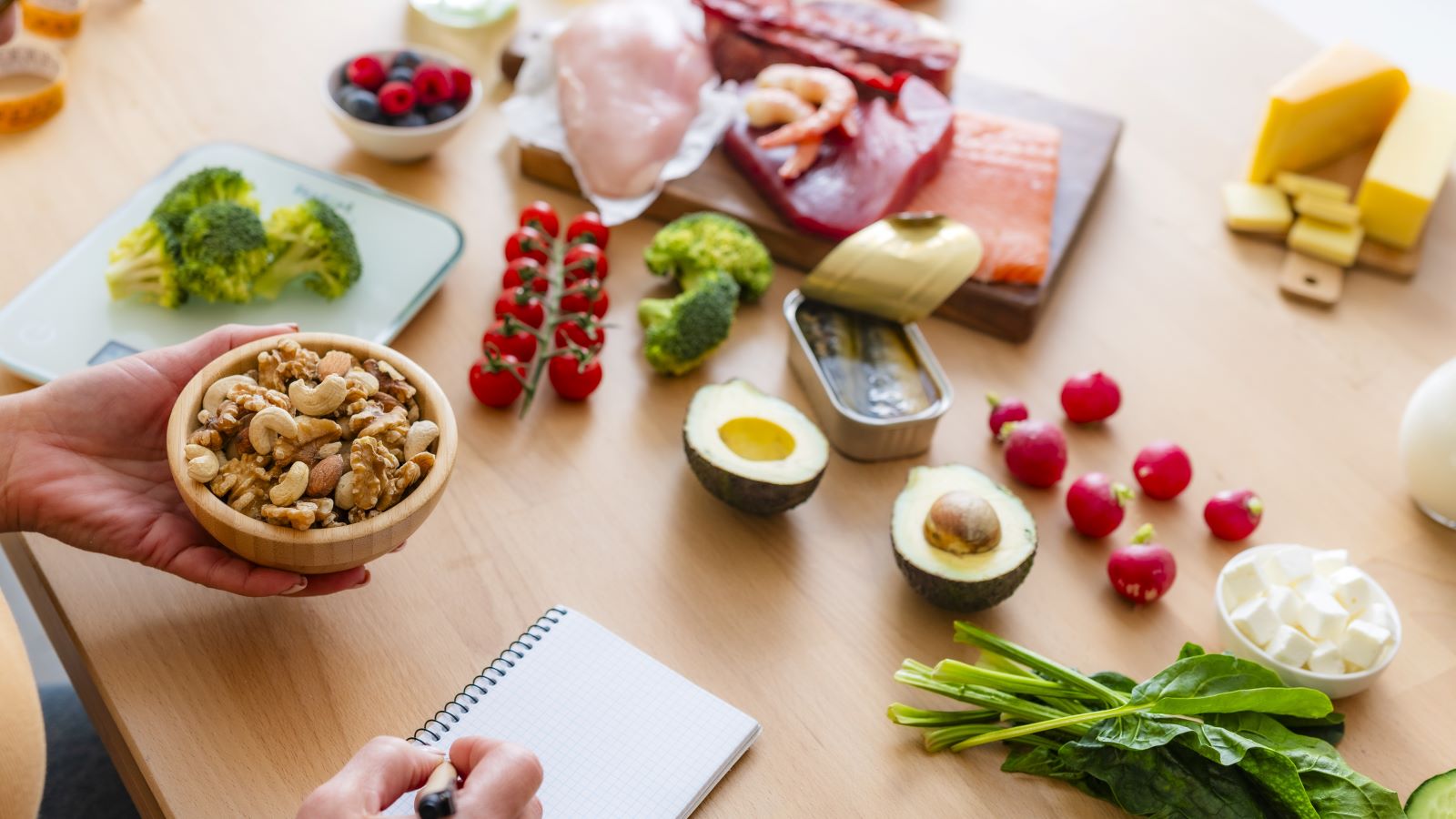
6. Write it down
You don’t need a fancy planner or perfect handwriting. A note on your phone or dry erase board on the fridge works just as well.
“When meals are written down, you can take the thinking out of it,” says Dr. Wu. “Think of it as a menu – when you write everything down, it allows you to pick and choose. That helps with both your meal planning and your grocery shopping, and it can be fun, too.”
Try to list five pre-planned dinners and leave two days flexible for leftovers or social plans. Fifteen focused minutes at the start of the week can save hours of stress later. And more importantly, it can make healthy eating feel manageable instead of overwhelming.