Most of us aren’t exactly keeping close track of how our breasts look or feel from one week to the next.
But getting familiar with what’s normal for you can make it easier to notice when something changes.
“Breasts can naturally feel different throughout the month and over time,” says Niamey Wilson, MD, with Hartford HealthCare. “Hormonal changes, your menstrual cycle, pregnancy, breastfeeding and menopause can all affect breast tissue. Getting familiar with those changes can help you recognize when something feels different.”
A breast self-exam can help you get familiar with what’s normal for your body. Here’s how to check them and what changes are worth bringing up with your doctor.
Start by looking for changes
Take a look at your breasts in the mirror with your arms at your sides, then raise them overhead.
Look for any new changes in the size, shape or appearance of either breast, including:
- Swelling
- Dimpling or puckering
- Redness or thickened skin
- A nipple that’s recently turned inward
- Changes around the nipple
And don’t worry if your breasts aren’t perfectly symmetrical. Most aren’t.
“It’s very common for one breast to be slightly larger or sit differently than the other,” Dr. Wilson notes. “Instead of comparing one breast to the other, compare each breast to what it normally looks like. Changes in the skin, shape or contour may be easier to see than they are to feel.”
> Related: What Dense Breast Tissue Means for Your Health
Get familiar with how your breasts feel
Using the pads of your three middle fingers, feel across each breast.
You can do this standing up, in the shower or lying down. Use small circular motions and light, medium and firmer pressure as you go.
Try to cover the full area, from your collarbone to the bottom of the breast and from your breastbone toward your armpit.
“There isn’t one specific technique you have to follow,” says Dr. Wilson. “Some breast tissue sits close to the skin while some is deeper, which is why using different levels of pressure can be helpful. Try to follow the same pattern each time so you’re less likely to miss an area.”
There’s no need to rush or search for a certain kind of lump. You’re just getting a sense of how your breast tissue normally feels.
> Related: At What Age Should I Start Getting Mammograms?
Pay attention to anything new
Breast tissue isn’t smooth, and it can feel lumpier at certain points in your menstrual cycle.
What matters is whether you notice something that wasn’t there before, like a new lump, firm area or thickening that feels different from the tissue around it.
“A new lump doesn’t automatically mean breast cancer,” says Dr. Wilson. “Cysts and other benign breast conditions can also cause lumps.”
Pain isn’t a reliable way to tell the difference either.
“Breast cancer doesn’t always cause pain, so tenderness isn’t a reliable way to decide whether a lump is concerning,” Dr. Wilson adds.
If you find a new lump that doesn’t go away, don’t try to figure out what it is by touch. Just have your docto check it.
Want a Weekly Dose of Health News?
Don’t forget your armpits
Breast tissue extends toward the armpit, so don’t forget to include that area.
A new lump or swelling there can have many causes. Lymph nodes, for example, swell when your immune system is responding to an infection.
“Lymph nodes in the armpit are part of your immune system, so they can temporarily swell when you’re fighting an infection,” says Dr. Wilson. “But swelling that persists, gets larger or appears without an obvious reason may need to be evaluated.”
Make your armpit part of the same routine so you’re less likely to forget it.
> Related: 7 Symptoms of Breast Cancer You May Not Know
Look for nipple changes
Lumps aren’t the only thing to watch for.
Watch for:
- New discharge, especially if it’s bloody
- A nipple that suddenly turns inward
- Crusting or scaling
- Redness or irritation that doesn’t improve
There’s no need to squeeze the nipple to check for discharge. If fluid comes out on it’s own, tell your doctor.
“Some nipple changes can come from irritation, skin conditions, hormonal changes or other noncancerous causes,” says Dr. Wilson. “What gets our attention is a change that happens on its own, especially new spontaneous discharge, or a nipple that suddenly pulls inward when it didn’t before.”
Skin changes around the nipple matter too, so pay attention to persistent scaling, crusting or irritation.
> Related: What the BRCA Gene Means for Your Cancer Risk
You don’t need a strict monthly schedule
Experts no longer recommend a formal monthly breast self-exam as a substitute for breast cancer screening.
Instead, the focus is on getting to know your own breasts.
“You don’t need to put a breast check on your calendar or worry that you’re doing it wrong,” says Dr. Wilson. “The goal is simply to know your normal well enough to recognize when something changes. I always tell my patients that you’re not hunting for lumps, but rather to have breast self-awareness. This way, you can detect any changes.”
If you do prefer a regular check, doing it around the same time each month makes it easier to notice changes.
“Hormones can make your breasts feel fuller, lumpier or more tender at different points in your cycle,” Dr. Wilson adds. “Checking at a similar time each month can give you a more consistent comparison.”
> Related: 4 Signs of Perimenopause (and How to Manage It)
Keep up with your mammograms
Knowing your breasts is important, but it isn’t a replacement for screening.
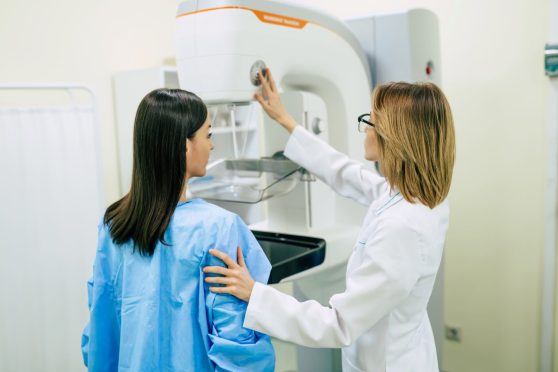
Mammograms can find breast cancer long before a lump or other change is large enough to notice, which is why routine screening is still necessary even if everything looks normal.
“A self-exam can only tell you about breast changes you can see or feel,” says Dr. Wilson. “A mammogram can detect abnormalities that you would have no way of finding on your own, sometimes before you have any symptoms at all.”
And if you notice a new lump, skin change, nipple change or anything else that seems unusual, don’t wait until your next appointment to bring it up.
“Many breast changes are caused by conditions that aren’t cancer,” Dr. Wilson adds. “But screening and breast awareness serve different purposes. Keeping up with recommended mammograms while knowing what’s normal for your body gives you the best opportunity to catch problems early, while they’re most treatable.”