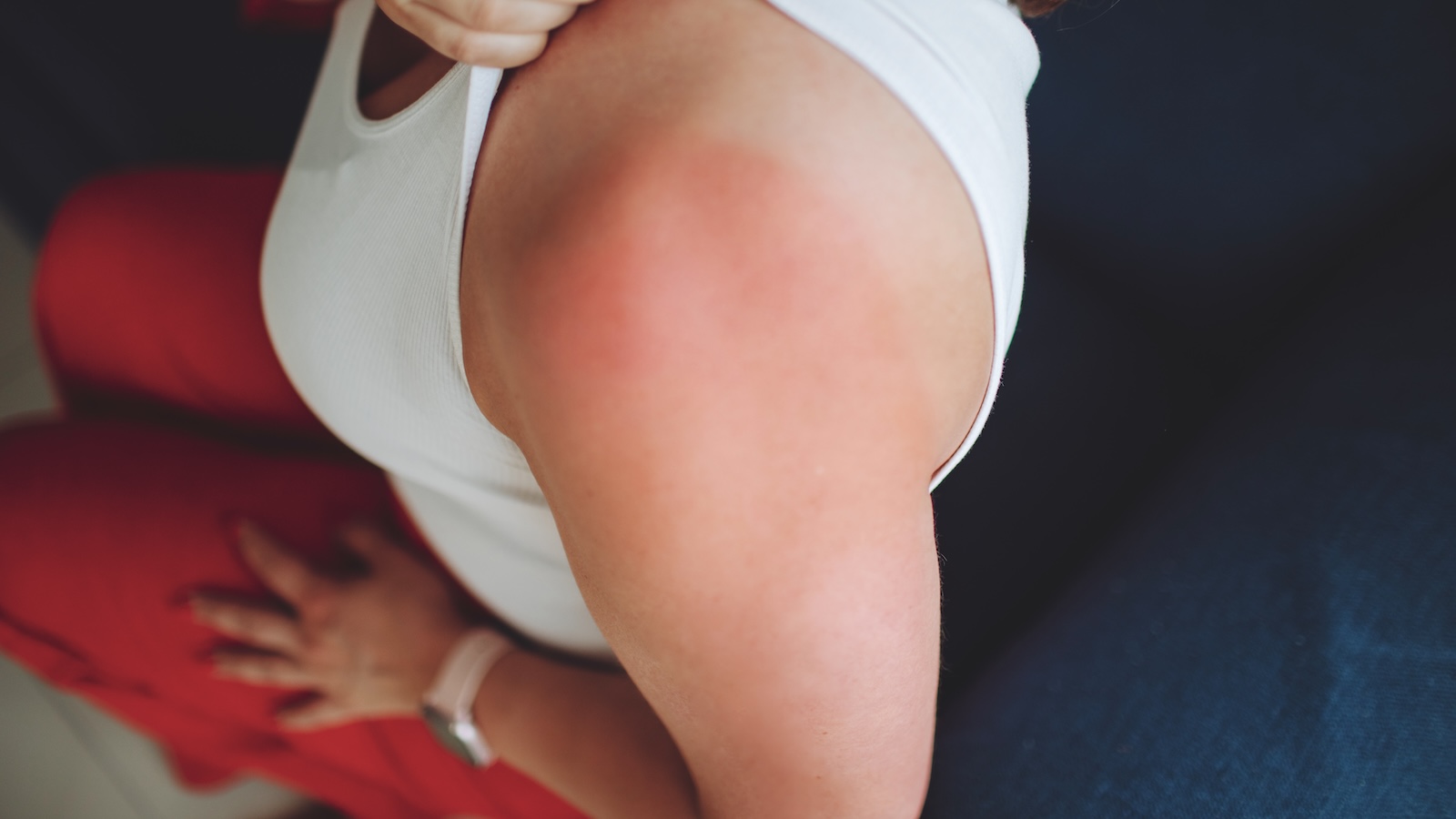

A sunburn can sneak up on you after just a few hours outside, even on a cloudy day. And if you wait too long to treat it, the next few days may be more uncomfortable than they need to be.
But the right first steps can help calm the pain and prevent more irritation.
“Most sunburns look worse before they look better,” says Taylor Abelli, MD, with Hartford HealthCare Medical Group. “The first day matters most. The goal is to cool the skin and stop more damage, not treat it like a wound that needs to be covered.”
Here’s what to put on a sunburn, what to avoid and when it’s time to get checked.
Virtual care - when and where you need it
1. Cool the skin within the first hour
On the first day, run cool water over the area or hold a damp towel against it for 15 minutes. Repeat every few hours.
“Ice can feel good, but it shouldn’t touch burned skin directly,” notes Dr. Abelli. “A cool, damp cloth works just as well without the risk of frostbite on top of a burn.”
Avoid numbing sprays with benzocaine, which can irritate skin that’s already sensitive. In the first 24 to 48 hours, also hold off on heavy ointments like petroleum jelly.
> Related: How to Choose Sunglasses That Actually Protect Your Eyes
2. Know what to put on a sunburn
What to put on a sunburn depends on where you are in the healing process. Early on, a lighter water-based cream is usually better tolerated on hot, inflamed skin.
“In the acute phase, something like Eucerin cream provides moisture without trapping heat,” explains Dr. Abelli. “Once the skin starts to calm down, move to something heavier like Aquaphor or petroleum jelly, which is what the CDC recommends for sunburn.”
Apply a thin layer two to three times a day and pat it on gently instead of rubbing it in.
> Related: Sun Poisoning vs. Sunburn: How to Tell the Difference
3. Stay hydrated and protect healing skin
Sunburn dries out your skin faster than you might expect. Drink extra water for the next day or two.
“Dehydration on top of a sunburn can bring on headaches and dizziness,” continues Dr. Abelli. “Most people don’t think to increase their water intake when they’re burned, but it speeds up recovery.”
Keep the area covered with loose clothing or shade for at least a week. Skin that’s already burned is more prone to getting sunburned again.
Want a Weekly Dose of Health News?
4. Prevent the next sunburn
Reapply broad-spectrum sunscreen every two hours and immediately after swimming or heavy sweating.
“An SPF 30 sunscreen blocks about 97 percent of UV rays when it’s applied correctly,” says Dr. Abelli. “Most people don’t use enough, and they forget to reapply.”
Seek shade between 10 a.m. and 4 p.m. when the sun is strongest. Check the UV index before planning a long day outside.
> Related: What to Know Before You Buy Sunscreen This Summer
5. Know when a sunburn needs medical care
Pay attention to how the burn looks and, most importantly, how you feel. These warning signs can tell you when at-home care isn’t enough.
“A mild sunburn that’s just red and sore usually heals on its own in about a week,” adds Dr. Abelli. “Blisters, fever or a burn that covers a large area are different. Those need a closer look.”
For mild redness, knowing what to put on a sunburn, like cool compresses and moisturizer, is usually enough. For blistering or a large burn, a virtual or in-person visit can help rule out infection or heat exhaustion. Burns on the face or around the eyes need same-day care, since they can affect vision.