
Everyone wants to know if they’re aging well. But health isn’t just about what happens at your annual physical. It’s also about what your body can still do every day.
Can you carry groceries without struggling? Walk upstairs and not feel winded? Get up off the floor without help?
“Many of the best signs of healthy aging aren’t found in a lab test,” says Christelle Nimba, APRN, a primary care provider with Hartford HealthCare Medical Group. “They’re reflected in your strength, balance, endurance and ability to stay independent.”
Here are a few simple things that can offer clues about your overall health at different ages.
1. Get up from the floor
This may be one of the most telling tests of healthy aging.
Getting down to the floor and standing back up requires strength, balance, flexibility and coordination. It also reflects how well different parts of your body work together.
“Being able to get up from the floor without assistance is a good sign of functional fitness,” Nimba says. “It’s a movement that many people don’t think about until it becomes difficult.”
Most healthy adults should be able to get up from the floor on their own, although it’s common to use a hand or knee for support as you get older.
If this movement feels challenging, it may be a sign that strength, mobility or balance could use some attention.
> Related: 9 of the Most Common Questions People Ask Their Doctor
2. Balance on one leg
Balance naturally changes with age. But being able to stand on one leg for several seconds remains an important marker of health because it can help predict fall risk and overall stability.
“Balance is something we often take for granted until we lose it,” Nimba says. “The good news is that it can often be improved through regular practice.”
While everyone’s abilities differ, many experts suggest healthy adults should generally be able to balance on one leg for:
- About 40 seconds in their 40s.
- About 35 seconds in their 50s.
- About 30 seconds in their 60s.
- About 20 seconds in their 70s.
If you wobble, don’t panic. Balance is highly trainable, and even small improvements can make everyday activities easier.
> Related: How to Build a Balanced Plate in 30 Seconds
3. Stand up from a chair
It may sound simple, but standing up from a chair relies heavily on leg strength, which becomes increasingly important as we age.
“We naturally lose muscle mass over time,” Nimba says. “Maintaining strength in the hips and legs can help preserve mobility and independence.”
Try sitting in a sturdy chair and standing up without pushing off the armrests or using your hands.
If you can do it comfortably, that’s a good sign your lower body is still doing its job.
Want a Weekly Dose of Health News?
4. Carry groceries
Carrying grocery bags requires grip strength, upper-body strength, core stability and endurance.
“Functional strength is the ability to handle everyday tasks,” Nimba says. “If activities like carrying groceries are becoming noticeably harder, it’s worth paying attention.”
You don’t need to carry every bag in one trip. But routine tasks shouldn’t leave you completely exhausted.
> Related: 5 After-Work Habits That Can Make or Break Your Health
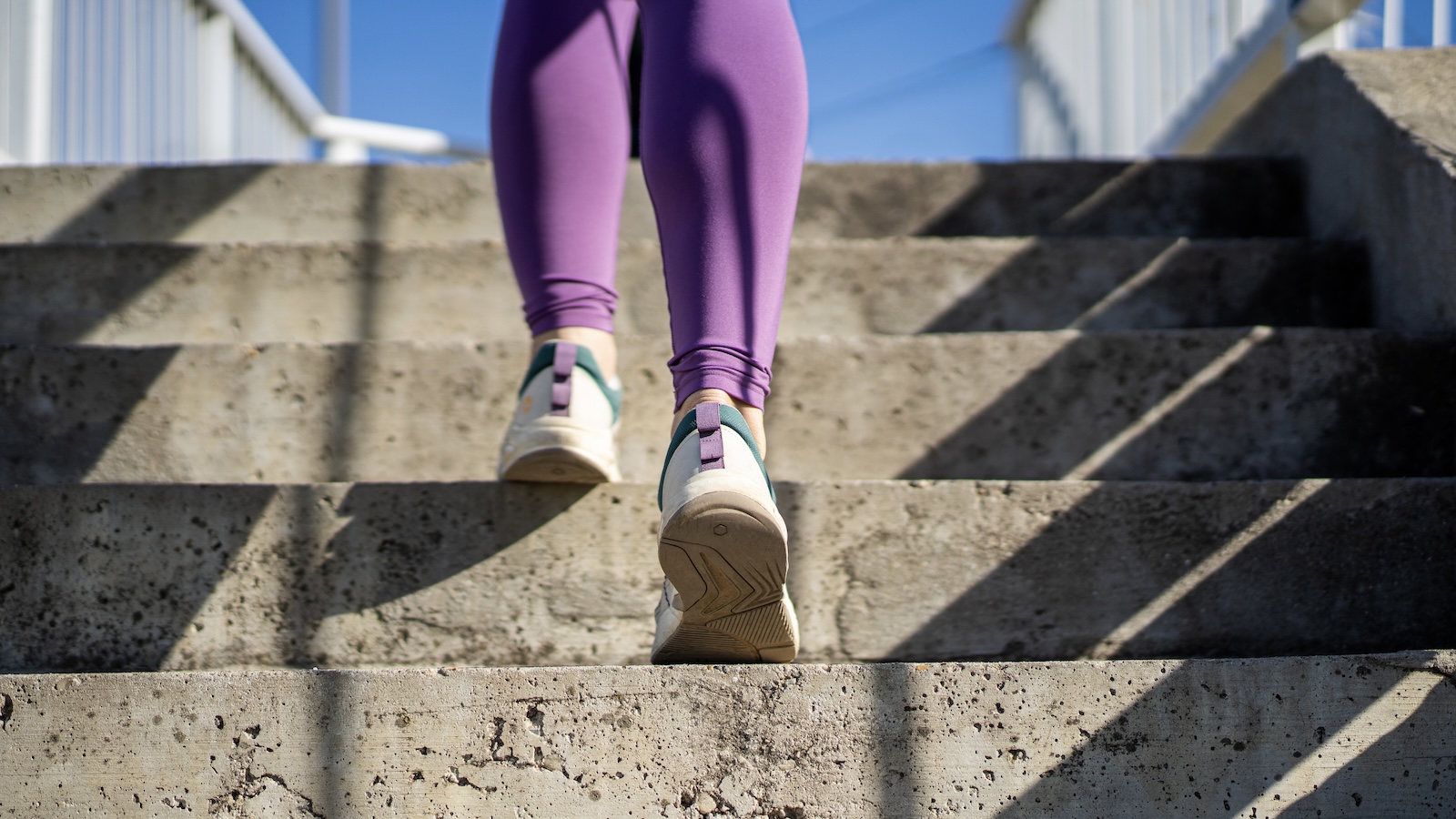
5.Climb a flight of stairs
Cardiovascular fitness matters at every age. One simple way to gauge it is to pay attention to how you feel during normal daily activities.
Walking several blocks, climbing a flight of stairs or keeping up during an outing shouldn’t leave you gasping for air.
“Endurance is one of the clearest signs of overall health,” Nimba says. “It reflects how well your heart, lungs and muscles are working together.”
If your stamina has changed dramatically, it’s worth mentioning it to your doctor.
> Related: 7 Healthy Habits You Can Fit Into a Commercial Break
Healthy aging doesn’t mean being perfect
You don’t need to ace every test on this list to be healthy, and no single movement can tell the whole story.
What’s most important is maintaining your ability to do the things you enjoy and live independently.
“Healthy aging looks different for everyone,” Nimba says. “The goal isn’t perfection. It’s staying active, capable and engaged in your daily life.”
If you’ve noticed that everyday tasks are becoming harder, don’t assume it’s simply part of getting older. Strength, balance and endurance can often improve at any age with regular movement and healthy habits.