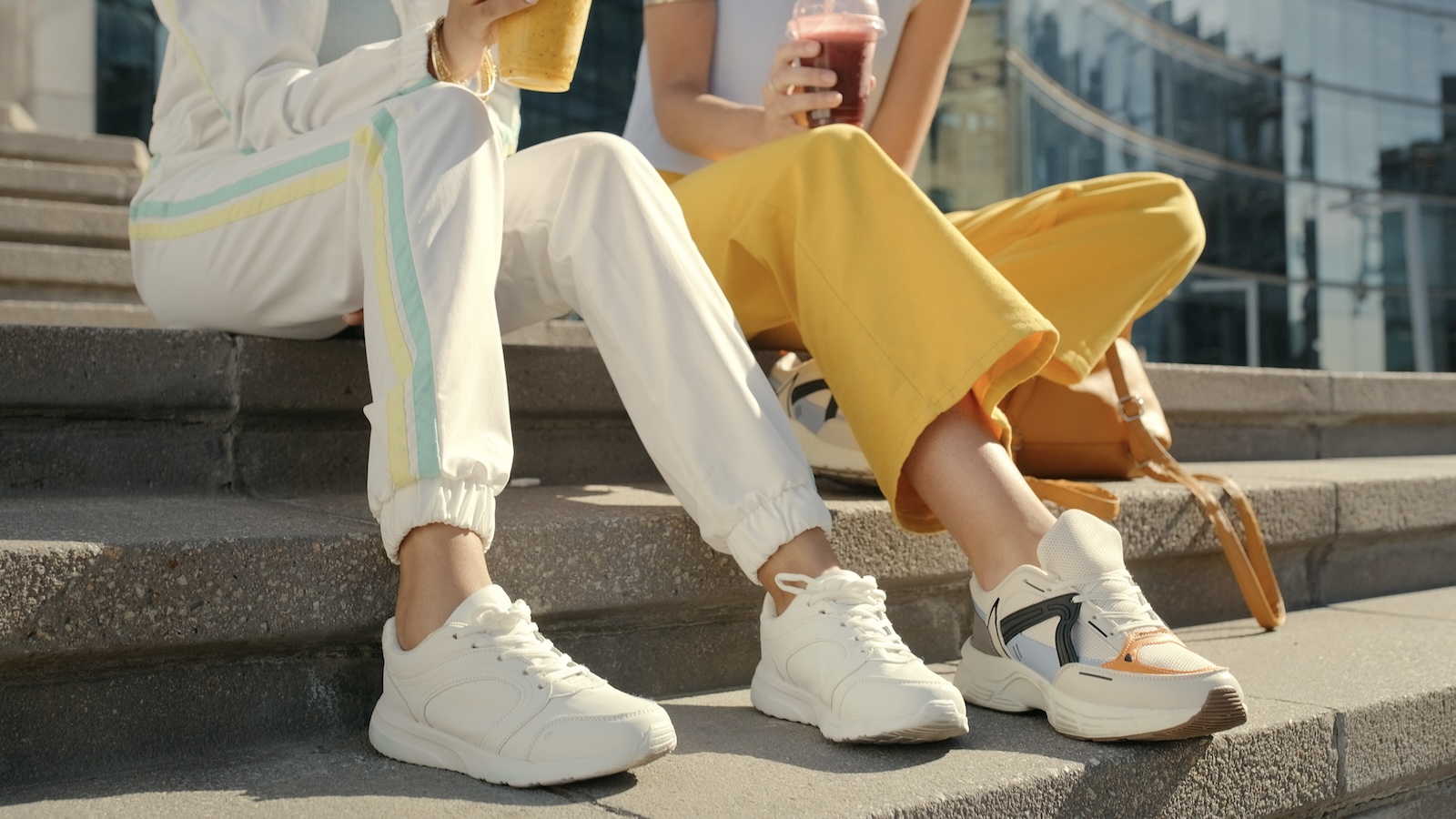

If you’re tired of achy knees after a long day, it might be time to take a look at your shoes.
It’s easy to write knee pain off as aging, arthritis or old injuries, but the shoes you wear can have just as much of an impact.
“The right shoes can provide a cushion, align your joints and make walking or standing much more comfortable,” says Mark Shekhman, MD, an orthopedic surgeon at the Bone & Joint Institute at Hartford Hospital. “On the other hand, unsupportive shoes can put extra strain on the knees over time.”
If you’re looking for shoes for knee pain, here are six styles Dr. Shekhman says your knees will thank you for.
1. Chunky sneakers
Good news for anyone who loves the “dad shoe” comeback: Chunky sneakers can actually be a smart choice for knee pain.
Think Hoka-style soles, New Balance classics or other cushioned sneakers with a wide, stable base. The goal isn’t just comfort. It’s shock absorption.
“Running or walking shoes with cushioning and arch support reduce the stress on your joints with every step,” Dr. Shekhman says.
Look for a pair that feels stable, not wobbly, and avoid overly soft soles that make your foot sink or roll. And if your feet tend to roll inward, try to find sneakers labeled “stability” or “motion control.”
> Related: The 6 Worst Exercises for Your Knees
2. Everyday walking shoes
For errands, travel days or long stretches on your feet, the best walking shoe is usually the one that feels steady, cushioned and easy to wear for hours.
“These shoes are designed to absorb shock, which helps protect not only the knees but also the hips and back,” says Dr. Shekhman.
Look for a shoe with a cushioned sole that doesn’t feel too squishy, a firm back that holds your heel in place and a wider toe box so your toes aren’t cramped. If you can twist the shoe like a towel or fold it completely in half, it probably isn’t giving your knees much support.
But make sure to avoid trendier options, like canvas slip-ons, thin retro sneakers and flat fashion shoes, which usually don’t offer enough structure for knee pain.
> Related: 5 Ways to Protect Your Knees as You Age
3. Low, wide-heeled dress shoes
High heels may look good, but your knees don’t love them.
“Even a two-inch heel can increase pressure on the kneecap and surrounding joint,” Dr. Shekhman notes. “If you want a little height, choose a low, wide heel instead.”
The best swaps are block heels, short wedges or dressy flats with built-in arch support. For work events, weddings or nights out, look for a heel that’s under two inches and wide enough to keep your foot stable.
> Related: 5 Best Types of Cardio When You Have Bad Knees
4. Slip-on loafers
Loafers are having a moment, from chunky lug-sole styles to office-ready pairs. But when it comes to knee pain, the details matter.
“Without ankle support to maintain proper mechanical alignment, these create too much pressure on the knees and can cause pain,” says Dr. Shekhman.
Instead, look for loafers or flats with cushioning, a supportive insole and plenty of ankle support. And beware of backless loafers or mules, which make your foot work harder to keep the shoe on.
“The key is having a shoe that stabilizes your foot and doesn’t let it collapse inward,” he adds.
That extra support helps align your legs and reduces strain around your knees.
Want a Weekly Dose of Health News?
5. Sandals with arch support
Flip-flops are a summer favorite, but they’re rarely knee-friendly. The thin sole, loose fit and lack of arch support can change the way you walk, which may put more stress on your knees.
But supportive sandals are a different story.
“Sandals with good arch support and a thicker sole can actually be a great choice,” Dr. Shekhman notes. “Brands like Tevas and Naot have well designed arch supports.”
Look for sandals with adjustable straps, a contoured footbed and a sole that feels sturdy under your foot.
> Related: 5 Worst Shoes for Your Feet
6. Boots with plenty of cushioning
Boots are a stylish winter footwear choice, but they can also be troublemakers for knee pain.
Very flat boots may not offer enough cushioning. High-heeled boots can shift your weight forward. And heavy boots can make each step feel like more work.
“Choose boots with a cushioned sole and a stable base, rather than very flat or very high-heeled styles,” Dr. Shekhman suggests.
Ankle boots with low heels or lace-up boots with supportive insoles can carry you comfortably through colder months.
> Related: Why Do My Knees Hurt in the Morning?
The right shoes can take pressure off your knees
Shoes may not be the first thing you think of when your knees hurt, but they can make all the difference.
“The right footwear supports proper alignment and decreases the stress your knees absorb with every step,” says Dr. Shekhman.
And the best part? With so many supportive options now designed to feel just as good as they look, you don’t have to sacrifice style to protect your joints.