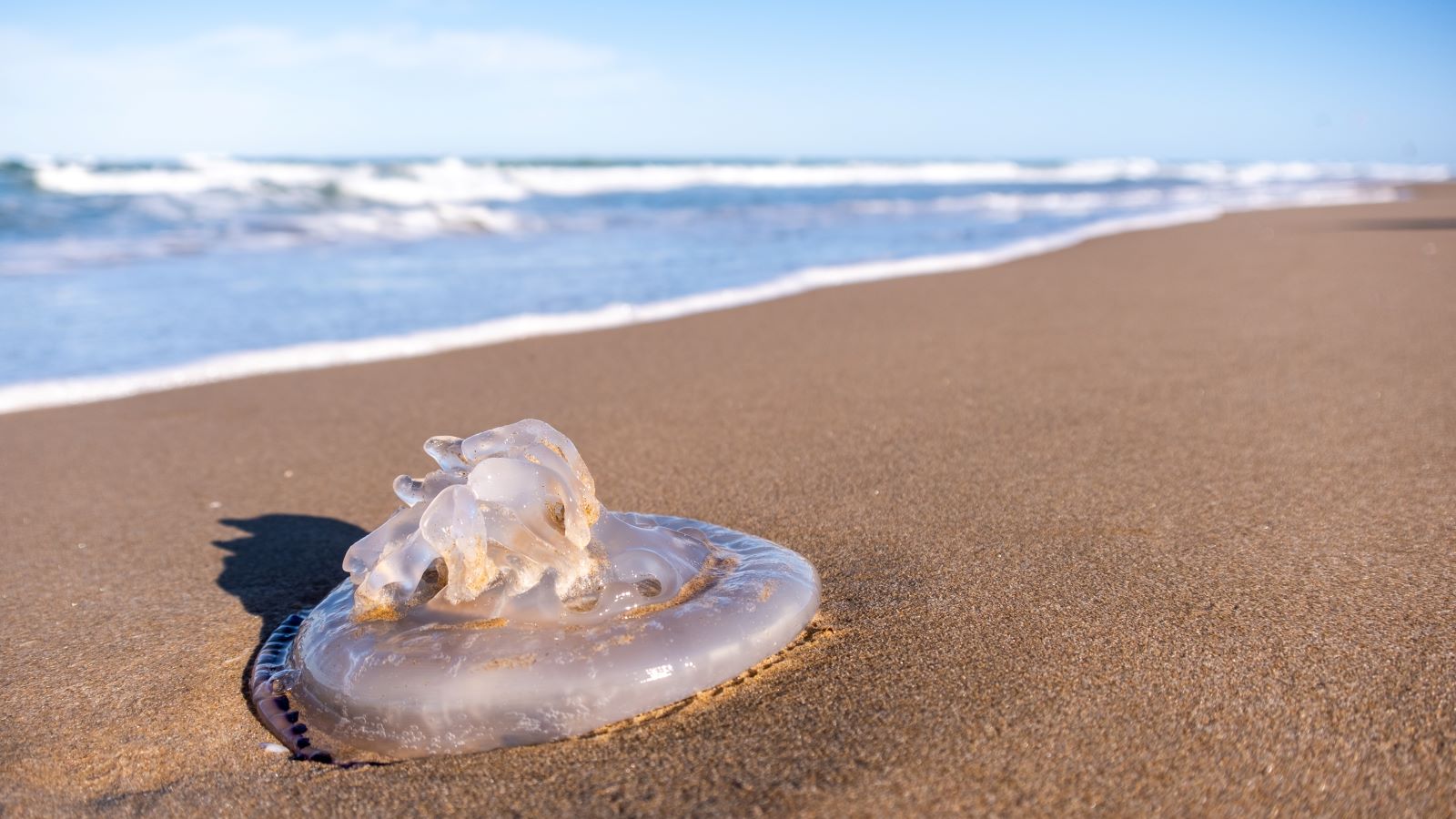

Nothing ruins a beach day faster than a jellyfish sting.
One minute you’re cooling off in the water. The next, your skin is burning, your leg hurts and everyone around suddenly has very strong opinions about what you should do next.
Before anyone suggests the most famous “remedy,” don’t.
“That’s one of the most common myths about jellyfish stings, but urine is not a reliable treatment,” says Syed Hussain, MD, with Hartford HealthCare. “In some cases, it may irritate the skin or trigger more stinging cells to fire.”
So what should you actually do after a jellyfish sting? Here’s what helps and what can make it worse.
Find an Urgent Care Center near me
Don’t pee on a jellyfish sting
As it turns out, peeing on a jellyfish sting is not a safe or effective treatment.
“Jellyfish tentacles contain tiny stinging cells that can continue releasing venom even after you’re out of the water,” says Dr. Hussain. “That’s why the wrong remedy can make the sting feel worse.”
And urine falls into that category.
Depending on its concentration, urine may aggravate the sting instead of calming it down. So if you’re tempted to try the old beach remedy, skip it. There are better options.
> Related: 12 Dos and Don’ts You Need to Know Before Your Next Sunburn
Fresh water won’t rinse it away
After a jellyfish sting, your first instinct might be to head straight for the shower. But fresh water isn’t always your friend here.
“Fresh water can sometimes cause remaining stinging cells to release more venom,” says Dr. Hussain. “That can make the pain worse instead of better.”
If you need to rinse the area, seawater is usually a safer option than tap water.
> Related: Why Am I So Tired After a Day in the Sun?
You shouldn’t scrape the sting with a credit card
You may have heard that scraping the skin with a credit card helps remove stingers. But that might not be the best move.
“Scraping can put pressure on the area and may cause more irritation,” says Dr. Hussain. “If tentacles are still attached, it’s better to lift them away carefully rather than drag something across the skin.”
A pair of tweezers is ideal if you have one. If not, protect your hand with a towel, plastic bag or glove before touching the area.
And whatever you do, don’t use your bare fingers.
> Related: 9 Places Ticks Love to Hide on Your Body
Ice isn’t always the best way to stop the pain
When something burns, ice feels like the obvious answer. But for many jellyfish stings, heat actually works better.
“Hot water can help reduce pain from many jellyfish stings,” says Dr. Hussain. “It should feel hot, but not scalding, and you should stop if it feels like it’s burning the skin.”
If possible, soak the affected area in hot water or use a hot shower until the pain starts to ease. If hot water isn’t available, do your best to keep the area still and avoid rubbing it.
Pain relief medication, like ibuprofen or acetaminophen, may also help if you can take it safely.
Want a Weekly Dose of Health News?
If the pain goes away, you still need to watch it
Most jellyfish stings are painful but not life-threatening. Still, you’ll want to keep an eye on your symptoms.
“Some reactions can show up later, including worsening redness, swelling, itching or skin irritation,” says Dr. Hussain. “And in rare cases, a jellyfish sting can cause a more serious allergic reaction.”
Watch for symptoms like:
- Trouble breathing
- Chest pain
- Dizziness or fainting
- Swelling of the face or throat
- Severe pain
- Nausea or vomiting
- A sting on the face, neck or near the eye
- A rash or irritation that keeps getting worse
> Related: 4 Skin Rashes to Watch Out for This Summer
So what should you actually do?
If you think you’ve been stung by a jellyfish, start with the basics.
“First, get out of the water so you don’t risk drowning or getting stung again,” says Dr. Hussain. “Then take a calm, careful approach to treating the area.”
And no, you don’t need to pee on a jellyfish sting to get relief.
Try these steps:
- Get out of the water.
- Remove visible tentacles carefully.
- Rinse with seawater if needed.
- Avoid fresh water, urine, alcohol, ammonia or rubbing the area.
- Soak the area in hot water if available.
- Use pain relief medication if needed and safe for you.
- Monitor for worsening symptoms.
It’s also a good idea to check posted beach warnings before swimming, especially during jellyfish season or after storms.
> Related: How to Relieve – And Prevent – Mosquito Bites
Here’s when it’s time to see a doctor
A minor jellyfish sting may improve with home care. But some stings need medical attention.
“Seek care right away if the pain is severe, the sting involves the face or eye, or you have any signs of an allergic reaction,” says Dr. Hussain. “It’s always better to be cautious, especially if you’re not sure what stung you.”
You should also get checked if redness, swelling, drainage or pain gets worse over the next few days.