
Most of us wouldn’t think twice about a sore calf, especially after a workout or a long day on our feet.
But sometimes, what feels like a pulled muscle could actually be a blood clot. And when that clot forms deep inside a vein, usually in your leg, it’s called deep vein thrombosis (DVT).
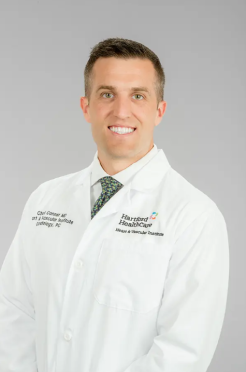
“One of the biggest misconceptions about blood clots is that you’ll always know when you have one,” says Chad Conner, MD, with Hartford HealthCare’s Heart & Vascular Institute. “Some people have very mild symptoms or none at all, which is why understanding your risk factors is just as important as knowing what to look for.”
Here are seven things to know about deep vein thrombosis.
1. Anyone can develop a blood clot
You don’t have to be older or have a serious health condition to develop DVT. Sometimes, a recent injury or surgery is enough to increase your risk.
Other risk factors include:
- Long periods with limited or no movement.
- Pregnancy or recently giving birth.
- Estrogen birth control or hormone therapy.
- A personal or family history of blood clots.
- Cancer or genetic clotting disorders.
“It’s not always one thing that causes a blood clot,” says Dr. Conner. “Someone might already have a higher risk because of their family history, but it’s an injury that keeps them off their feet for a few weeks that makes a clot more likely to develop.”
> Related: How to Heal After a Pulled Muscle
2. DVT symptoms aren’t always obvious
It’s easy to mistake a blood clot for a muscle strain, especially when the discomfort starts in your calf.
But there are a few warning signs worth paying attention to:
- Swelling: Usually in one leg, particularly around your calf or ankle.
- Pain or tenderness: Feels like cramping or soreness, even without an injury.
- Warmth: The affected area may feel warmer than the rest of your leg.
- Skin changes: Redness or discoloration around the clot.
“You won’t necessarily experience every symptom,” says Dr. Conner. “But if you notice unexplained pain or swelling in one leg, it’s important to get it checked promptly, even if the discomfort seems minor.”
> Related: 5 Signs of Bad Circulation You Might Be Ignoring
3. Blood clots can travel to your lungs
One of the most dangerous complications of deep vein thrombosis is a pulmonary embolism.
This happens when part of a clot breaks loose and travels to your lungs, where it can block blood flow and become life-threatening.
Warning signs include:
- Sudden shortness of breath
- Chest pain, especially when taking a deep breath
- A rapid or irregular heartbeat
- Coughing up blood
- Lightheadedness or fainting
“A pulmonary embolism can happen without someone ever noticing symptoms of a clot in their leg,” says Dr. Conner. “For some people, sudden trouble breathing or chest pain is the first sign that something is seriously wrong.”
Want a Weekly Dose of Health News?
4. Sitting too long increases your risk
Ever notice how stiff your legs feel after a long flight or road trip?
Spending hours in the same position can slow blood flow through your legs, making it easier for a clot to form.
Travel lasting more than four hours can increase your risk, especially if you have other risk factors. But for most healthy travelers, the overall risk remains low.
“If you’re sitting for several hours, try to get up and walk every hour or two,” says Dr. Conner. “Even simple movements like flexing your ankles or raising your heels can help keep blood circulating when you’re stuck in your seat.”
> Related: This Is Why You Should Never Eat Lunch at Your Desk
5. An ultrasound can help detect a blood clot
If your doctor suspects DVT, they’ll usually recommend an ultrasound to check for a clot in your veins.
You may also need a blood test called a D-dimer, which can help determine whether further testing is necessary.
“An ultrasound is one of the most reliable ways to diagnose DVT,” says Dr. Conner. “It’s a painless test that allows us to see whether blood is flowing normally through the veins or if there’s a blockage.”
Because other conditions can cause similar symptoms, testing is the only way to know whether a blood clot is responsible.
> Related: 6 Signs Your Heart Might Be Struggling
6. Most blood clots can be treated without surgery
The most common treatment for DVT is medication called anticoagulants, or blood thinners.
These medications help prevent a clot from growing and reduce the risk of new clots forming while your body gradually breaks down the existing one.
Most people need treatment for at least three months, but some may need it longer depending on their risk factors.
And while more serious cases sometimes require a procedure to remove a clot, many people can be treated with medication alone.
> Related: Do I Really Need to Take a Blood Thinner?
7. Your risk doesn’t end after your first blood clot
If you’ve had DVT before, you’re more likely to develop another blood clot in the future. But that doesn’t mean another one is inevitable.
Your doctor might recommend longer-term treatment or additional precautions, especially if you have a genetic clotting disorder or other risk factors.
“Once someone has had a blood clot, we want to understand what caused it,” says Dr. Conner. “A clot that develops after surgery is different from one that happens without a clear reason, and that can affect how long someone needs treatment.”