
Getting a positive Cologuard test can stop you in your tracks.
You weren’t expecting it. You feel fine. And now you’re staring at results that sound a lot scarier than you were prepared for.
“A positive Cologuard test doesn’t mean you have cancer. But it does mean it’s time for the next step,” says Tai Ho, MD, a gastroenterologist with Hartford HealthCare’s Digestive Health Institute.
Here’s what a positive result really means and what should happen next.
A positive result doesn’t automatically mean cancer
Cologuard looks for blood and abnormal DNA in your stool. Those changes can come from colon cancer, but they can also come from polyps or other non-cancerous conditions.
“A positive Cologuard test means something abnormal was detected, not that you have cancer,” Dr. Ho says. “A good proportion of people with a positive result do not end up having colon cancer but may have pre-cancerous polyps that can be removed during a colonoscopy.”
The test is designed to be sensitive, which means it sometimes flags changes that turn out to be benign. That’s why follow-up testing matters.
> Related: 5 Early Signs of Colon Cancer You Should Know
The next step is a colonoscopy
After a positive Cologuard test, a diagnostic colonoscopy is recommended. This is the only way to find out what caused the abnormal result.
“A colonoscopy allows us to look directly at the colon and remove polyps if we find them,” Dr. Ho says. “It’s both diagnostic and preventative.”
Even if you don’t have symptoms, this step is essential. Without it, the screening process isn’t complete.
> Related: 7 Common Questions About Colonoscopies
Timing matters, but it’s not an emergency
A positive result can feel urgent, but this isn’t something that needs to happen overnight.
“We generally recommend scheduling a colonoscopy within a few months of a positive test,” Dr. Ho says. “Waiting too long defeats the purpose of screening.”
If anxiety, scheduling or prep concerns are holding you back, talk with your provider. Delaying only adds uncertainty.
Want a Weekly Dose of Health News?
The prep is usually the toughest part
For many people, the idea of colonoscopy prep is more intimidating than the procedure itself, which is performed with anesthesia sedation
“The procedure itself typically takes less than an hour, and patients are comfortable the entire time,” Dr. Ho says. “It is a same day procedure, and patients can resume their normal activities the following day.”
While the prep can be unpleasant, there are now new options that make the process more manageable.
And in many cases, your doctor can share initial findings right after the procedure. If biopsies are taken, those results usually follow later.
If polyps are found, they’re often removed during the colonoscopy, and next steps depend on what those results show. Your findings will also help determine how and when you’re screened in the future.
> Related: 4 Tips for Colonoscopy Prep
Here’s what to do next
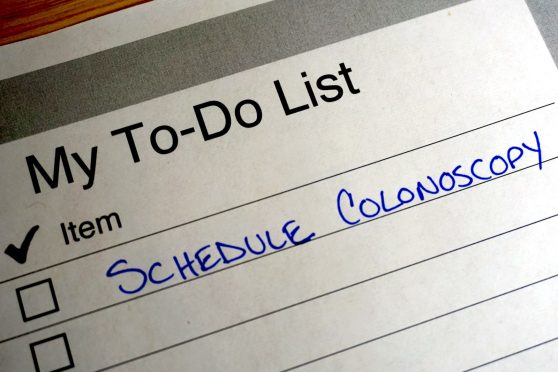
If you’ve had a positive Cologuard test and haven’t scheduled a colonoscopy yet, now is the time to do it.
A positive result isn’t a diagnosis, but it is a clear signal to follow up. Completing the next step is what turns a screening test into meaningful information and helps guide what comes next.