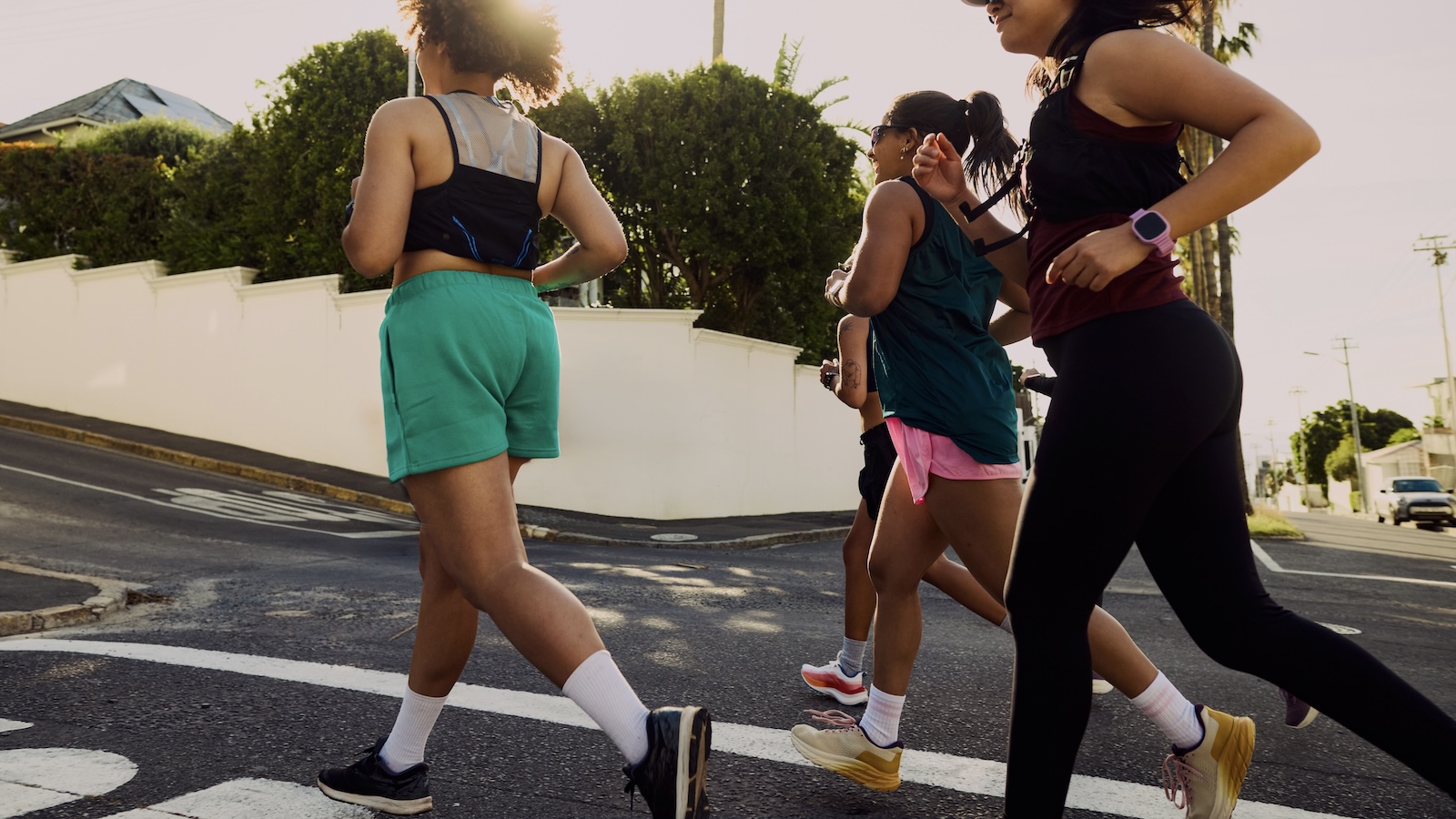

A lot of new runners quit before they ever find their rhythm. And it’s not always because they’ve lost motivation. If your shoes or gear leave you uncomfortable, those first few runs can be enough to make you reconsider.
But it doesn’t take much to get it right. A good pair of running shoes, comfortable clothing and a simple plan will get you further than any expensive gadget.
We asked Ryan Rossi, PTA, CSCS, with the Center for Musculoskeletal Health at Hartford HealthCare’s Bone and Joint Institute, to walk us through running gear for beginners: what to buy, what to skip and what to save for later.
“The goal in the beginning is simple,” says Rossi. “Make it as comfortable as possible. If you’re comfortable, you’ll keep going. If you’re not, you won’t.”
The right shoes can make or break your first running experience
A well-cushioned shoe with a moderate heel-to-toe drop is the right starting point for most beginners running on pavement. Heel-to-toe drop refers to how much higher your heel sits than the front of the foot. A moderate drop helps absorb impact and reduces strain on your Achilles and calves as your body adjusts to running.
“Buy your running shoes a half size larger than your regular shoe size,” Rossi notes. “Your feet can swell during a run, and you’ll need that extra room. Beyond that, the most important thing is a comfortable fit.”
And it’s probably best to skip the big box stores, if possible. A specialty running shoe store can walk you through a proper fitting and help you find the best running shoe for your feet. This process can prevent a lot of the injuries that sideline new runners in the first few weeks.
> Related: Why Do My Hips Hurt When I Run?
Comfortable clothing matters more than you think
You don’t need a technical running wardrobe. A breathable, non-cotton shirt and comfortable loose-fitting shorts are enough for your first runs.
“The more you like what you’re wearing, the more you’ll want to put it on and get out the door,” Rossi explains. “That sounds simple, but it matters more than people think.”
Wearing shorts with a built-in liner and a phone pocket means you don’t have to hold your phone or use an armband. If you’re prone to blisters, it may also be helpful to invest in a cushioned running sock.
> Related: 6 Strength Training Tips to Protect Your Knees From Running
What you need for outdoor runs
If you’re running outside, it’s worth adding a few other items to your routine.
When it comes to running gear for beginners, small comfort items can make a big difference.
A sweat-resistant hat keeps the sun off your face and sweat out of your eyes. Apply sunscreen to protect yourself from UVA and UVB rays. Another thing to consider is chafing.
“Chafing is one of those things new runners don’t think about until it happens,” Rossi adds. “A little Body Glide on your legs before a run can save you a lot of pain on the way home.”
These small additions can make a real difference.
Want a Weekly Dose of Health News?
A training program is worth more than any gadget
An inexpensive beginner training program will do more for your progress than any piece of equipment. Before you spend money on a watch, download a plan. Many apps offer beginner programs that coach you through your early runs step by step.
“You don’t need a running coach yet,” Rossi shares. “But having a program you can interact with from your phone keeps new runners on track and takes the guesswork out of it.”
Consistency beats equipment every time.
> Related: Is Running Bad for Your Knees?
What to skip until you’re ready
If you’re a beginner, you don’t need a sport watch, heart rate monitor, hydration belt or energy gel until you’re running longer than 40 minutes. That kind of gear can make things more complicated than they need to be when you’re just starting out.
The best running gear for beginners should make getting started easier, not more complicated.
“Those devices can be overwhelming for a new runner,” Rossi says. “They can actually take away from the primary goal, which is just getting out for some consistent running. Most runners will not need extra fueling until they build up to greater than 40 to 45 minutes of running.”
The same goes for racing or minimalist shoes. As Rossi puts it: “The fancier race shoes and minimal stuff can come later.”
The best advice? Start boring, get comfortable. Then upgrade.