
First came girl dinner. Now, social media has moved on to kibble bowls.
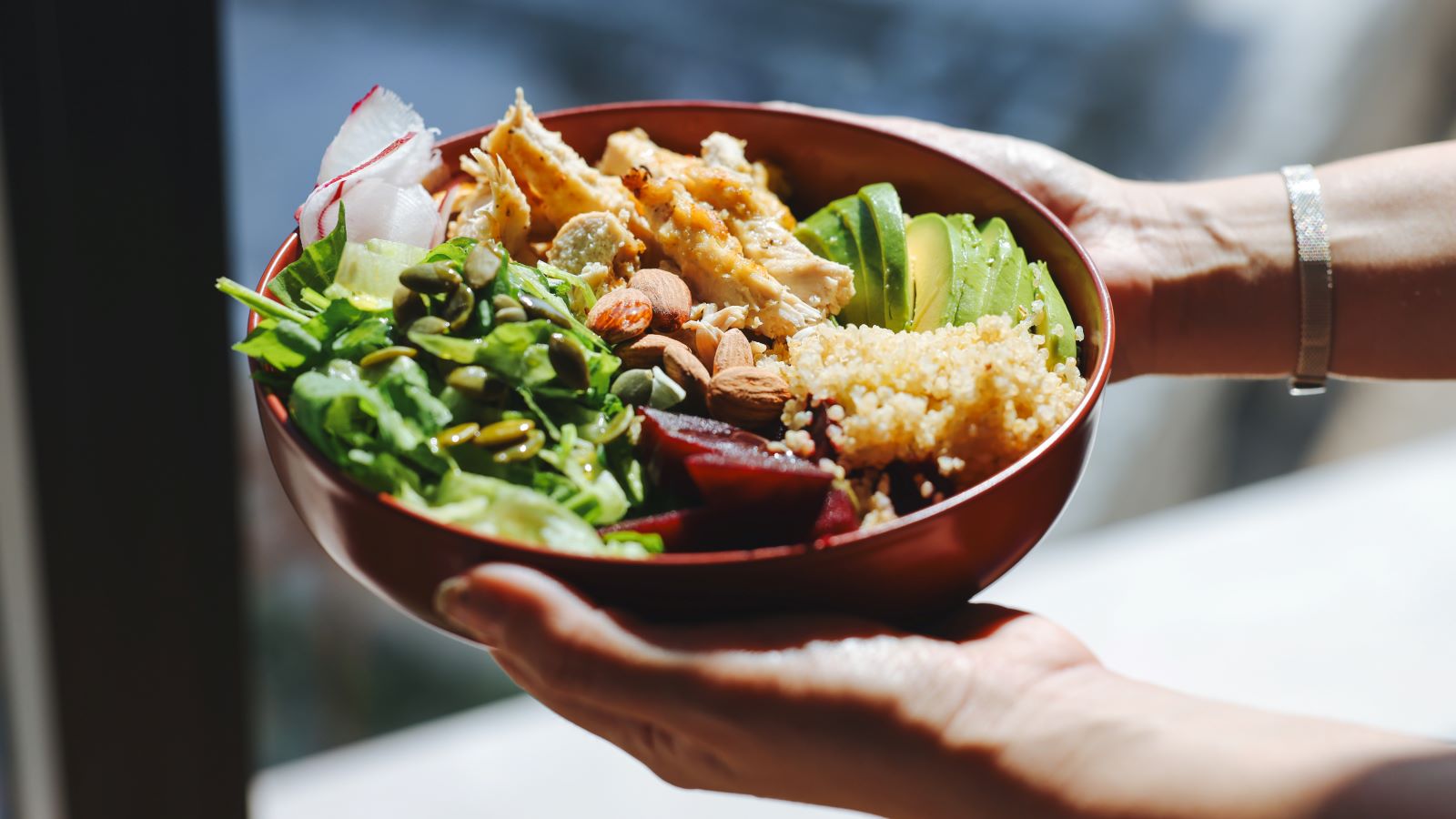
Also called boy kibble or human kibble, the trend is exactly what it sounds like: tossing a protein, carb and maybe a few extras into a bowl and calling it dinner.
But can it actually be healthy?
“The idea of a simple, balanced bowl can absolutely work,” says Christopher Barrett, RD, a registered dietitian with Hartford HealthCare. “The key is making sure it has enough variety – not just protein and rice.”
Here’s how to build one that actually works for your health.
1. Start with a protein
Most kibble bowls begin with protein, and that’s not a bad place to start.
Protein helps keep you full, supports muscle health and can make a quick meal feel more satisfying. Ground beef is popular in many social media versions, but it’s not your only option.
Try:
- Lean ground turkey or lean ground beef
- Chicken Breasts / Thighs
- Salmon or Tuna
- Eggs
- Beans or lentils
- A homemade veggie burger
- Tofu or tempeh
“Protein is important, but it doesn’t have to come from the same source every time,” Barrett says. “Changing it up helps you get a wider range of nutrients.”
If you do choose ground beef, consider a leaner option and balance it with plenty of vegetables.
> Related: How to Build a Balanced Plate in 30 Seconds
2. Add a carbohydrate for energy
Rice is the classic kibble bowl base for a reason.
It’s affordable, easy to prep and pairs well with almost anything. But carbohydrates aren’t just filler – they’re your body’s preferred source of energy.
“A balanced meal usually includes a carbohydrate,” Barrett says. “The goal isn’t to avoid carbs. It’s to choose ones that help fuel the moments in your day.”
Good options include:
- Brown rice
- Quinoa
- Farro
- Sweet potatoes
- Roasted potatoes
- Whole Wheat pasta
- Corn or whole grain tortillas on the side
For extra fiber, try mixing white rice with cauliflower rice, beans or vegetables.
“Most Americans don’t meet their daily fiber needs,” Barrett says. “Whole grains can be a great place to start.”
> Related: The 9 Foods Nutritionists Always Have in Their Grocery Carts
3. Don’t forget the vegetables
This is where many social media kibble bowls fall short.
A bowl of beef and rice may be convenient, but it can miss out on fiber, vitamins, minerals and color. Adding vegetables makes the meal more balanced – and more filling.
“Vegetables are what turn a basic bowl into a more complete meal,” Barrett says. “They add volume, fiber and nutrients without making the meal complicated.”
Not sure where to start? Barrett recommends adding two different colors of vegetables to your bowl.
It’s a simple way to bring in more variety – and more nutrients.
Easy add-ins include:
- Broccoli
- Peppers
- Spinach
- Kale
- Onions
- Cucumbers
- Tomatoes
- Carrots
- Zucchini
- Frozen mixed vegetables
And yes, frozen vegetables count.
In fact, they can be one of the easiest ways to make a kibble bowl healthier in minutes.
> Related: The Nutrition Mistakes You Didn’t Know You Were Making
4. Add a healthy fat
A little fat can make your bowl more satisfying.
Healthy fats support fullness and help your body absorb certain vitamins, including vitamins A, D, E and K. They also add flavor and texture, which matters if you’re trying to make a meal you’ll actually want to eat again.
Try:
- Avocado
- Olive oil
- Nuts or seeds
- Tahini
- Hummus
- Pesto
- A sprinkle of cheese
“Fat helps with satiety, but portion size still matters,” Barrett says. “A small amount can go a long way.”
Think of it as a finishing touch – not the entire bowl.
> Related: 8 Easy Ways to Curb Cravings Without Cutting Out Your Favorite Foods
5. Use sauce to make it less boring
A healthy meal still needs to taste good.
That’s where sauce comes in. The right sauce can take a basic protein-and-rice bowl and make it feel like something you’d actually order for lunch.
Try flavor combinations like:
- Salsa, avocado and black beans
- Tzatziki, cucumber and chicken
- Peanut sauce, tofu and vegetables
- Sriracha, rice vinegar and sesame seeds
- Hummus, roasted vegetables and farro
“Flavor is important,” Barrett says. “If a meal feels bland or repetitive, it’s harder to keep it in your routine.”
Just keep an eye on sauces that are high in added sugar or sodium, especially if you’re using them often.
Want a Weekly Dose of Health News?
5. Make it meal-prep friendly
One reason kibble bowls are popular? They’re easy to prep ahead.
You can cook a few ingredients once, then mix and match throughout the week. That makes the trend especially helpful for busy schedules.
A simple meal prep formula:
Protein + carbohydrate + vegetable + fat + sauce
For example:
- Ground turkey + brown rice + peppers + avocado + salsa
- Chicken + quinoa + cucumbers + hummus + tzatziki
- Tofu + rice + broccoli + sesame seeds + peanut sauce
- Salmon + sweet potato + spinach + olive oil + lemon yogurt sauce
“Meal prep doesn’t have to mean eating the exact same meal every day,” Barrett says. “You can prep ingredients and build different bowls from them.”
That keeps things easy without making your meals feel repetitive.
> Related: 7 Foods You Can Meal Prep on Sunday to Eat Healthier All Week
6. Watch out for the “same bowl every day” trap
A kibble bowl can be healthy. But eating the same version every day can leave gaps.
If your bowl is always beef and rice, you may miss out on different vitamins and minerals which may people are deficient. You might also get bored – which can send you right back to takeout.
“Consistency is helpful, but variety matters too,” Barrett says. “Different foods offer different nutrients.”
An easy fix? Change one part of the bowl each time.
Small changes can make a big nutritional difference.
> Related: Can You Eat the Same Meals Every Day and Still Be Healthy?
7. Keep portions balanced
Because kibble bowls are usually served in one big bowl, portions can sneak up quickly.
That doesn’t mean you need to measure everything. But it can help to think about balance as you build.
A simple visual guide:
- Half the bowl: vegetables or fruit
- One quarter: protein
- One quarter: carbohydrate
- A small topping: healthy fat or sauce
For an athlete’s kibble bowl, Barrett suggests shifting the balance:
- Half the bowl: carbohydrate
- One quarter: protein
- One quarter: vegetables or fruit
- A small topping: healthy fat or sauce
“This kind of structure helps people build a meal that’s filling and balanced,” Barrett says. “It’s flexible, which is what makes it realistic.”
And realistic is the goal.
> Related: Diet vs. Exercise: What Matters More for Your Health?
A kibble bowl can be healthy, if you build it right
The social media version may look like a bowl of beef and rice. But your version can do a lot more.
Barrett says. “With a few smart additions, they can also be balanced, satisfying and nutritious.”
So yes, you can keep the low-effort dinner. Just give it a little more color.