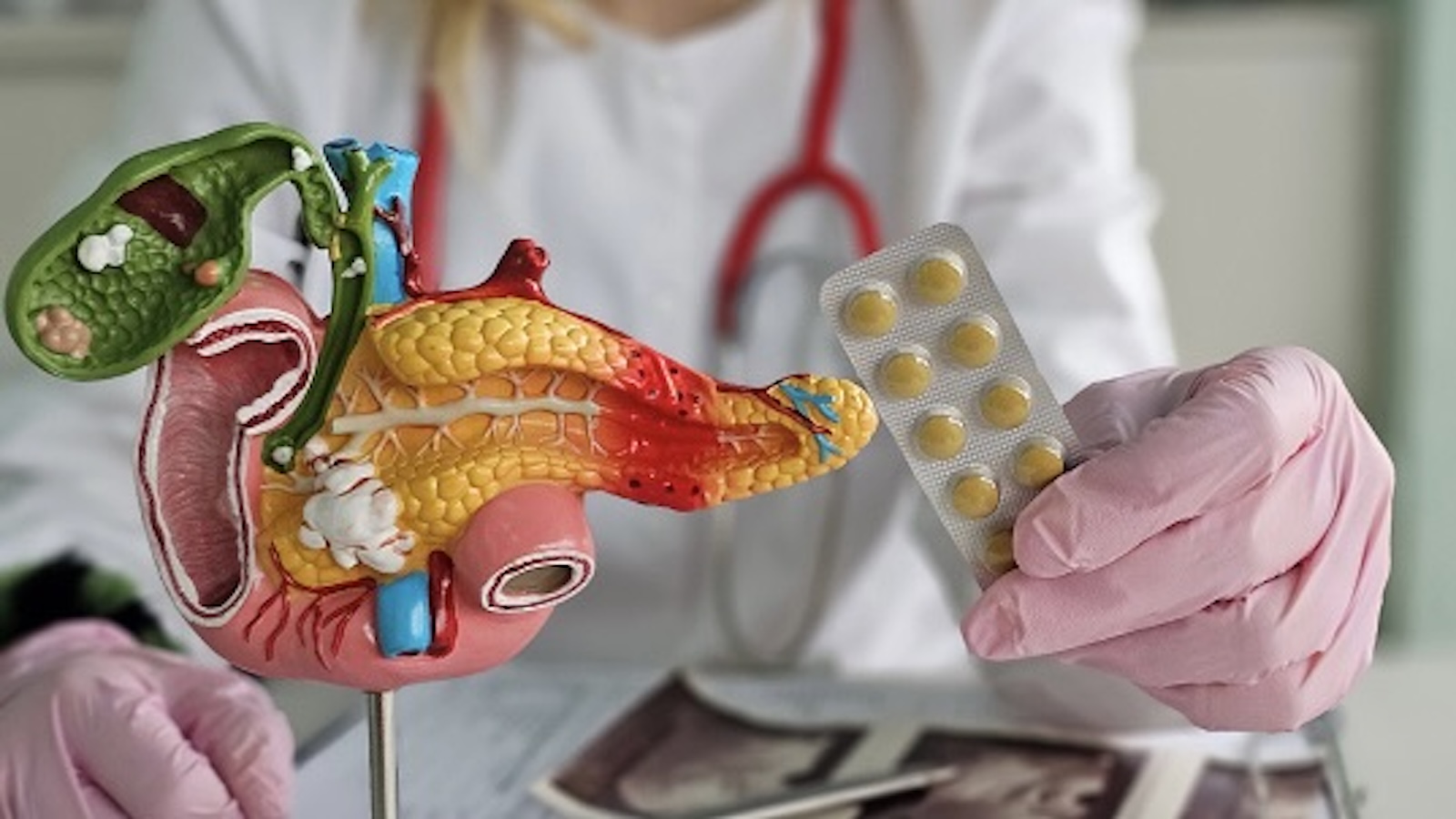

Pancreatic cancer is one of the hardest cancers to treat.
But a newly approved pill is giving some patients another option, and the results are getting attention.
The FDA recently approved daraxonrasib, a targeted treatment for certain people with metastatic pancreatic cancer. Patients taking the drug lived twice as long as those receiving standard chemotherapy.
“For pancreatic cancer, seeing this kind of improvement in survival is very meaningful,” says Andrew Salner, MD, with Hartford HealthCare’s Cancer Institute. “It doesn’t mean we’ve solved pancreatic cancer, but it gives us another treatment option for patients who historically haven’t had many.”
Here’s how the drug works and who might benefit from it.
Daraxonrasib targets a major driver of pancreatic cancer
Most pancreatic adenocarcinomas involve changes to proteins called RAS. When RAS becomes overactive, it can keep sending signals that tell cancer cells to grow.
Researchers have been trying to target RAS for decades, but developing medications that can effectively block it has been difficult.
Daraxonrasib works by blocking multiple forms of active RAS, interfering with signals the cancer cells use to grow and survive.
“RAS has been an important target in pancreatic cancer research for a long time, but it’s also been incredibly difficult to treat,” Salner says. “Being able to directly target that pathway opens up an entirely new approach for some of our patients.”
> Related: Why Pancreatic Cancer Is So Hard to Catch
Patients lived nearly twice as long in the clinical trial
The FDA approval was based on a clinical trial involving 500 adults with metastatic pancreatic adenocarcinoma whose cancer had progressed after previous treatment.
Half received daraxonrasib, while the other half received standard chemotherapy.
The survival difference was substantial. Median overall survival was:
- 13.2 months with daraxonrasib
- 6.7 months with standard chemotherapy
The drug also delayed cancer progression. Patients taking daraxonrasib went a median of 7.2 months before their cancer worsened, compared with 3.6 months with chemotherapy.
Tumors shrank in about 30% of patients taking daraxonrasib, compared with 11% of those receiving chemotherapy.
“When we talk about median survival, we’re looking at the midpoint across an entire group of patients, not predicting exactly how long one individual will live,” Salner says. “But a difference of this size tells us the treatment was providing a meaningful benefit across the study population.”
> Related: Does Diabetes Increase Your Risk of Pancreatic Cancer?
It’s a once-daily pill, but it requires close monitoring
Daraxonrasib is taken by mouth once a day, rather than given through an infusion. So for patients used to chemotherapy appointments, treatment can look very different. But taking cancer treatment at home doesn’t mean patients can skip regular monitoring.
“Taking a pill at home can sound much simpler than coming in for chemotherapy, but it’s still cancer treatment,” Salner says. “Patients need to stay closely connected with their care team so we can monitor side effects, see how the cancer is responding and make adjustments when needed.”
Common side effects include rash, diarrhea, mouth inflammation, nausea, fatigue, vomiting, abdominal pain, swelling and decreased appetite. The drug also carries warnings for more serious problems, including severe skin reactions, lung inflammation and gastrointestinal perforation.
Want a Weekly Dose of Health News?
The drug isn’t for everyone with pancreatic cancer
Daraxonrasib is approved for adults with metastatic pancreatic adenocarcinoma, meaning the cancer has spread beyond the pancreas.
Patients must also have either:
- Already received at least one systemic cancer treatment, or
- Been considered unable to receive a combination of systemic therapies
So this isn’t necessarily replacing chemotherapy as the first treatment for those newly diagnosed with pancreatic cancer.
“This is an important new option, but it’s not the right treatment for every person with pancreatic cancer,” Salner says. “Where it fits depends on the type and stage of the cancer, what treatments someone has already received and their overall health.”
> Related: Can Supplements Help Prevent Cancer?
It gives doctors another way to treat a difficult cancer
Pancreatic cancer is often diagnosed after it’s already spread. And once the cancer stops responding to chemotherapy, treatment choices can become limited.
Daraxonrasib gives doctors another option, but its approval is also a major development in pancreatic cancer treatment.
“This is the kind of progress we want to keep seeing in pancreatic cancer,” Salner says. “One new treatment isn’t going to work for everyone, but every effective option gives us another way to personalize care and hopefully help patients live longer.”