
The grocery store is designed to tempt you, and it’s effective. From bakery smells to discount snack displays, it’s easy to walk in for milk and walk out with a cart full of treats.
But what if figuring out how to grocery shop healthier didn’t require reading a single label?
According to Hayley Merrill, PA-C, a physician assistant with Hartford HealthCare Medical Group, it doesn’t.
“You don’t need to count calories or put your grocery list in a spreadsheet to ‘win’ at the grocery store,” Merrill says. “One easy hack can solve your grocery troubles.”
If you’ve ever wondered how to grocery shop healthier, the answer might be simpler than you think.
The rule: Make half your cart produce
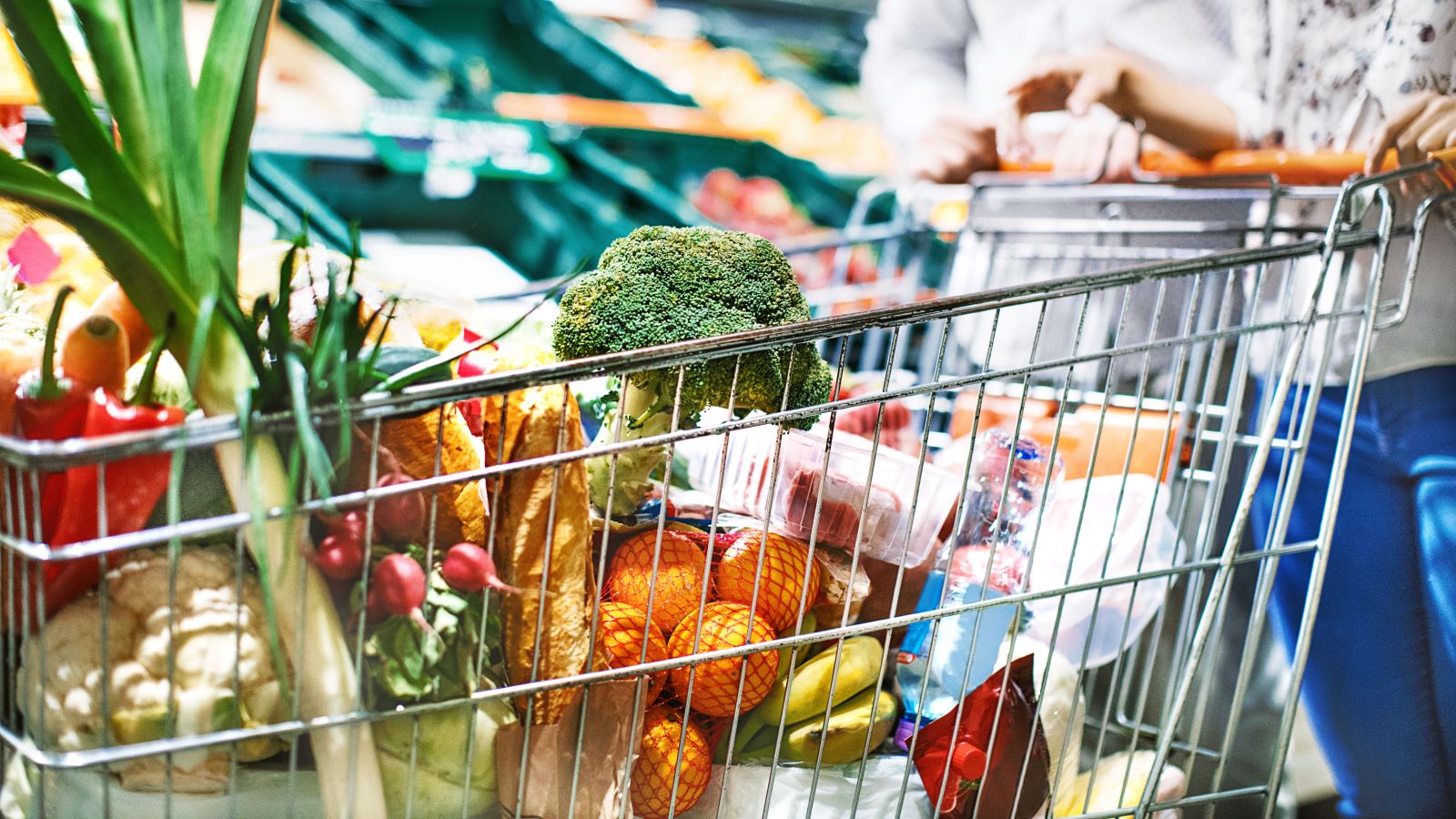
Before you debate cereal brands or compare snack labels, start in the produce section. Aim to fill half your cart with fruits and vegetables before moving on.
“If you’re committed to prioritizing produce, you’ll find a way to weave them into every meal you’re planning. Suddenly, you won’t be looking to calorie dense sides or desserts to round out your meals – you’ll already have filled in the gaps with produce,” Merrill says.
Think berries to add to your yogurt or oatmeal, or vegetables to toss into that soup you’ve been wanting to make.
“Fruits and vegetables are rich in fiber, antioxidants, vitamins and minerals that support heart health, digestion and immune function,” Merrill adds. “And importantly, they take up room on your plate where something high in calories, fat, sugar or sodium might usually go.”
> Related: Make Your Grocery Trip Instantly Healthier With These 5 Swaps
Restriction takes a back seat
This rule works because it shifts your focus away from restriction.
“The produce section is great, because there are no longing stares at all the foods you’re trying to avoid. Instead of restriction, you can focus on addition, and get excited about the fresh fruits and vegetables you’re adding to your menu,” says Merrill.
Start with your favorite fruits, a mix of leafy greens and colorful vegetables so you have something to look forward to.
> Related: The Nutrition Mistakes You Didn’t Know You Were Making
Variety is key
It doesn’t matter if everything is organic, local or perfectly in season. Variety is the most important thing.
“Different colors often represent different nutrients,” Merrill says. “For example, dark leafy greens provide folate and vitamin K, orange vegetables provide beta carotene and berries offer powerful antioxidants.”
And you don’t need a complicated recipe to weave in produce.
“When your fridge contains a wide range of produce, something will naturally blend into each meal you make. Even simple combinations, like grilled chicken with roasted vegetables or salmon with a mango salsa, add tons of extra nutrients.
> Related: The 8 Best Fruits for Your Health
Choose foods you’ll actually eat
Tired of staring at the rotten pineapple you never felt like cutting? Healthy intentions tend to fall apart in the preparation stage.
“Pre-washed greens, baby carrots, berries and bananas are all excellent options,” Merrill says. “They reduce preparation time, which is often what keeps produce from being eaten.”
And don’t sleep on the frozen options.
“Frozen fruits and vegetables can be just as healthy as fresh produce, as long as you choose options that aren’t packed with extra sodium,” says Merrill. “They’re a great backup for busy weeks, or the nights you just don’t have the energy to break out the cutting board.”
If it makes produce easier to eat, it’s probably worth buying.
Want a Weekly Dose of Health News?
Build meals around that produce
When half your cart is produce, your meals naturally shift.
“When you have fruits and vegetables as a foundation, you’re more likely to pair those with healthy options,” Merrill notes. “A shopping cart already full of fresh, vibrant produce doesn’t scream pasta or pizza, it lends itself to leaner options like chicken breast or salmon.”
And that also influences portion sizes.
“When produce fills most of your plate, you’re more likely to eat appropriate portions of the other foods,” Merrill adds.
Think roasted vegetables with salmon, stir fry with extra broccoli or grain bowls layered with greens.
> Related: The 8 Best Vegetables for Your Health
A cart full of produce makes junk food easier to skip
Here’s where this rule really works. Instead of wandering into the snack aisle with an empty cart, you’re looking at one that’s already full of healthy options.
“If your cart is packed with berries, bananas, celery, cucumbers or any of your other favorite produce, Lays and Doritos start to sound a lot less important,” Merrill says.
And if you do slip up?
“When you’re spending your week eating filling, nutritious foods, cheat days are less likely to spiral out of control. Suddenly there’s a little more flexibility if you’re craving a few spoonfuls of ice cream on the heels of a healthy, balanced meal.”
So next time you shop, start with produce. Fill half your cart. And let that one rule do the heavy lifting.