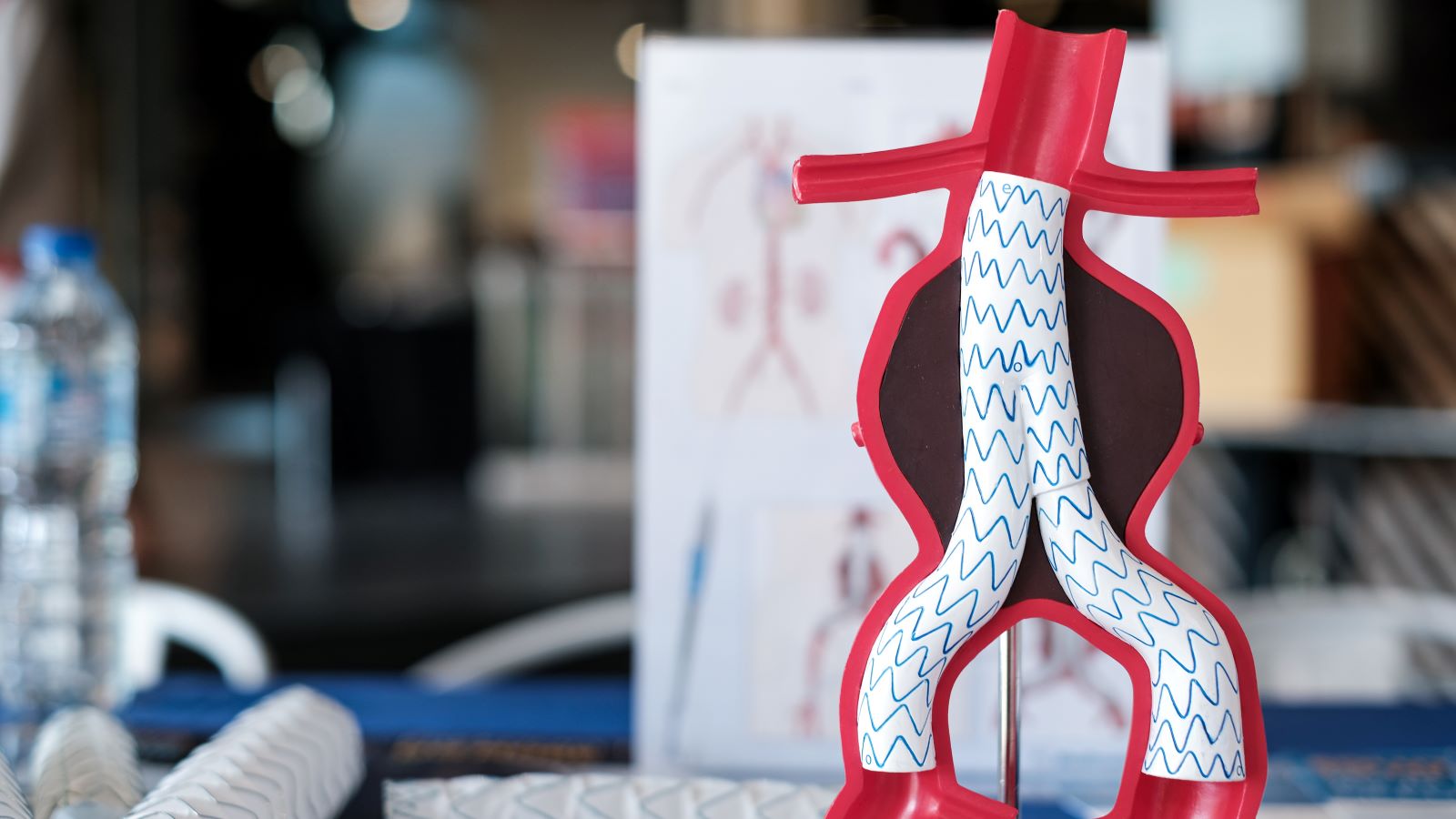
Aortic aneurysms have a reputation for bursting or tearing. And yes, both can be life-threatening.
But does every aneurysm eventually cause these major problems? Not necessarily.
“Most aortic aneurysms don’t burst or tear,” says Jason Zakko, MD, cardiac and aortic surgeon with Hartford HealthCare’s Heart and Vascular Institute. “A tear is called a dissection, and while they can be life-threatening, many people live with aneurysms for years. The key is catching them early and monitoring them before they reach a dangerous size.”
Here’s what actually happens and why an aneurysm doesn’t always mean an emergency.
Not every aneurysm grows the same way
Some aneurysms grow quickly. Others barely change for years.
“The growth rate depends on factors like age, smoking history, blood pressure and family history,” Dr. Zakko says. “Two people can have the exact same size aneurysm and see very different patterns over time.”
That’s why regular imaging, usually an ultrasound or CT, matters just as much as the initial diagnosis.
Size makes a difference
When aneurysms stay small, they’re far less likely to burst or cause other serious problems.
“For thoracic aortic aneurysms, which occur in the chest, we usually start talking about repair around 4.5 to 5 centimeters,” Dr. Zakko says. “Below that threshold, the risk of rupture is generally low.”
Think of size as a risk gauge. The larger the aneurysm gets, the more closely it needs to be watched. And even if an aneurysm is small, rapid growth can signal a higher risk.
> Related: Aortic Aneurysms: Everything You Need to Know
Symptoms aren’t a reliable warning sign
Aneurysms can be hard to detect because many don’t cause any symptoms at all.
“People often feel perfectly fine,” Dr. Zakko says. “That’s the dangerous part. You can’t depend on pain or discomfort to alert you.”
When symptoms do appear, such as sudden severe back or chest pain, it can signal that aneurysms may burst, dissect or rapidly expand, and that’s when emergency care is essential.
Want a Weekly Dose of Health News?
You can lower your risk of rupture
Even if you already have an aneurysm, there’s plenty you can do to keep it stable.
“Managing blood pressure and cholesterol and quitting smoking are some of the biggest ways to reduce risk,” Dr. Zakko says. “They’re simple changes, but they make a real difference.”
Your provider might also recommend medications to help support healthy blood pressure and cardiovascular health.
> Related: Could Your Heart Murmur Be Aortic Stenosis?
Screening saves lives – especially if you’re at higher risk
Many aneurysms are found by accident during scans for something else. Others are caught through screening.
“We recommend a one-time echocardiogram (ultrasound) for people who have chronic hypertension or a history of smoking,” Dr. Zakko says. “It’s quick, painless and can catch a potentially dangerous aneurysm long before it becomes a problem.”
If you have a strong family history, your provider may suggest screening earlier.
Here’s when it’s time to see your doctor
If you’ve never been screened, especially if you’re over 65 or have a history of smoking or high blood pressure, it’s worth talking with your provider.
And if you’ve already been diagnosed with an aneurysm but haven’t followed up with imaging in over a year, don’t wait.
“Aortic ruptures and dissections are preventable when we catch aneurysms early,” Dr. Zakko says. “Monitoring is the safest thing you can do, and it gives us plenty of options before it ever becomes an emergency.”