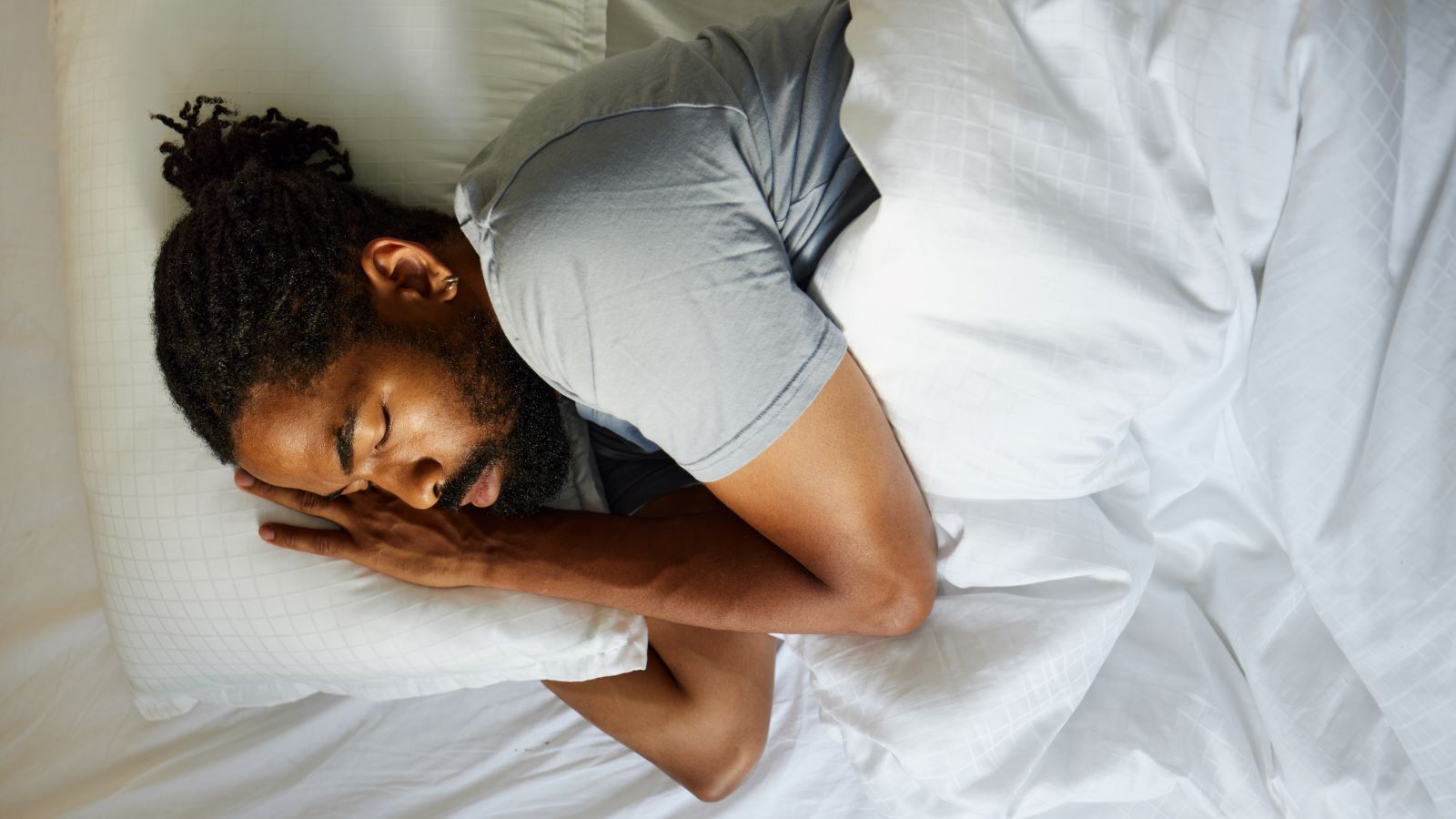

Whether it’s curled up like a cat or stretched out like a starfish, we all have a favorite way to sleep. And while comfort is king at bedtime, your go-to sleeping position might actually be telling you something about your health.
“Your posture at night can affect everything from back pain to breathing to digestion,” says Joe Li, DO, primary care physician with Hartford HealthCare Medical Group. “There’s no one-size-fits-all, but knowing the pros and cons of your usual sleep position can help you make small adjustments for better rest.”
Here’s how your sleeping position could be helping – or hurting – your health.
Virtual care - when and where you need it
1. Back sleeping
Always fall asleep flat on your back? Your spine will thank you for it.
“Sleeping on your back helps keep the head, neck and spine in a neutral position,” says Dr. Li. “That reduces pressure and can help prevent aches and pains.”
But while your spine is happy, your partner might not be.
“Sleeping on your back can make snoring or sleep apnea worse, because gravity is pulling your tongue back and can cause narrowing of your airway. If your partner is complaining about your snoring, it might be time to roll over.”
> Related: Can These 3 Supplements Really Improve Your Sleep?
2. Side sleeping
It’s one of the best sleeping positions for your health, and it’s also one of the most popular.
“Side sleeping can reduce acid reflux, help digestion and improve circulation ,” Dr. Li notes. “It also helps with snoring compared to back sleeping.”
But there’s a glaring downside.
“Unfortunately, it isn’t quite as good from an orthopedic perspective. Sleeping on your side is more likely to cause shoulder or hip discomfort,” says Dr. Li.
If that sounds like you, try placing a pillow between your knees to keep your hips aligned and take some pressure off.
> Related: How to Choose the Right Pillow for Neck Pain
3. Fetal position
Curling up tight under the covers isn’t just comfy, it’s also great for your back.
“The fetal position can be comforting and may ease lower back pain for some people,” says Dr. Li.
But tucking yourself in too tightly can strain your joints and limit deep breathing.
“This position can also overexaggerate the natural curve of your spine by flexing too much,” says Dr. Li. “This can result in posture issues like stiffness, discomfort or nerve compression.”
Try to relax into a looser curl, and make sure your pillow supports your head without forcing your chin to your chest.
Want a Weekly Dose of Health News?
4. Stomach sleeping
Sorry, stomach sleepers, but this one’s tough to defend.
“Sleeping on your stomach can feel comfortable for some, but it’s the least ergonomic. It often leads to neck and back pain because the spine isn’t aligned,” says Dr. Li. “It also puts pressure on muscles and joints that can leave you sore in the morning.”
If you can’t quit the habit, use a very thin pillow (or none at all) to keep your neck from twisting too far. Small tweaks can make it less stressful on your spine.
> Related: 5 Ways to Sleep With Hip Pain
5. Starfish
Flat on your back, arms and legs stretched out wide is the sleep position of choice for some. And while it may not look elegant, but it has its perks.
“This position can also help reduce acid reflux,” says Dr. Li. “But it may worsen snoring and leave you with shoulder discomfort if your arms are raised above your head.”
If you’re a starfish sleeper, try keeping your arms lower and placing a supportive pillow under your neck.
Here’s the bottom line.
There’s no “right” sleeping position, just the one that works best for you.
“The best position is the one that lets you rest comfortably without waking up sore or struggling to breathe,” says Dr. Li.
But if you’re dealing with chronic pain, snoring, or reflux, a few small adjustments can make all the difference.
“Try different support pillows to help you optimize your sleep position, spinal alignment and overall ergonomics,” says Dr. Li. “If you’re still having issues with sleep quality, pain or discomfort, or breathing issues at night, check in with your primary care provider. They can help identify underlying causes that might not be related to your sleeping position at all.”
So snuggle up, shift around if you need to, and remember: good sleep matters more than picture-perfect posture.