
When knee pain starts affecting your daily routine, it may be time to look at your options. And for many people, the question isn’t whether to have knee replacement surgery, but which type may be the better fit.
“Not every knee needs the same solution,” says Stephen Nelson, MD, a joint replacement surgeon at the Connecticut Orthopaedic Institute. “The right procedure depends on where the damage is and how your knee is functioning overall.”
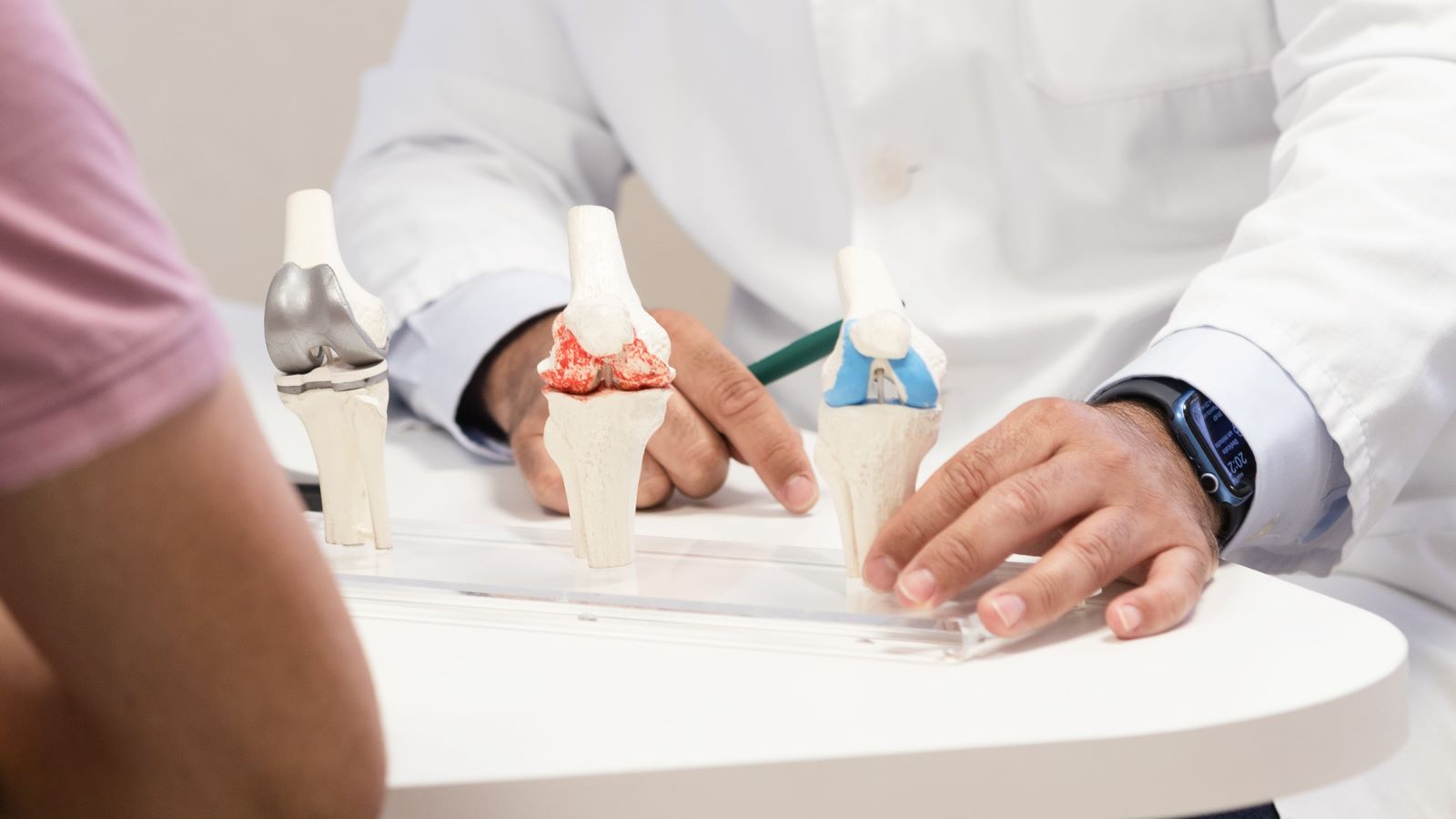
In some cases, a partial knee replacement can address damage in one part of the joint while preserving healthy bone and tissue. In others, a total knee replacement is the most effective path to lasting relief. Knowing how these procedures differ is an important first step in figuring out what may work best for you.
Here’s how partial and total knee replacements compare, and what may work for you.
Partial knee replacement treats one area
A partial knee replacement – also called a unicompartmental knee replacement – is for people whose arthritis or damage is limited to just one section of the knee.
“We don’t need to replace the entire joint in these cases,” explains Dr. Nelson. “Instead, we only resurface the damaged portion to preserve as much of your natural knee as possible.”
That includes keeping healthy bones, cartilage and ligaments intact. The best candidates have strong ligaments and arthritis that hasn’t spread to multiple areas of the joint.
“Because the procedure is less extensive, patients often recover more quickly and say their knee feels more natural afterward,” says Dr. Nelson.
> Related: 6 Signs Your Knee Pain Is Actually Arthritis
Total knee replacement rebuilds the joint
When arthritis affects multiple areas of the knee – or if the joint is stiff, deformed or the ligaments aren’t strong enough to support a partial replacement – a total knee replacement may be the better option.
“In this procedure, we resurface the ends of the thigh bone and shin bone, and usually the kneecap, with durable implants,” explains Dr. Nelson. “These metal and plastic components replace the damaged joint surfaces and restore smoother motion.”
While recovery can take longer than with a partial replacement, most people are walking with assistance soon after surgery and keep progressing with physical therapy.
“When damage is widespread, replacing the whole joint often provides the most reliable pain relief and restored function,” says Dr. Nelson. “It can be life-changing for people living with advanced arthritis and daily discomfort.”
Want a Weekly Dose of Health News?
How do you and your doctor decide?
When comparing partial and total knee replacements, it’s important to remember that knee replacement surgery isn’t one-size-fits-all. Your doctor will look at several factors to determine the best approach, including:
- Where the arthritis is located.
- Knee stability and alignment.
- Ligament strength.
- Age and activity level.
- Overall health or medical conditions that could affect healing.
“There’s no universal answer,” says Dr. Nelson. “Your knee and your lifestyle will guide the decision that’s best for you.”
It’s also important to know that knee replacement isn’t always the right choice.
“We may hold off on surgery if someone has active infections, uncontrolled medical conditions, severe muscle weakness or other health issues that could affect healing,” says Dr. Nelson. “And if we have younger, highly active patients hoping to return to high-impact sports, we may consider other options first.”
> Related: Why Your Knee Pain Gets Worse as You Age
Not sure where to start?
If knee pain is interfering with your daily life, even after trying therapy, medications or injections, it’s time for an evaluation.
“An early visit doesn’t mean you’re signing up for surgery,” says Dr. Nelson. “It’s just a chance to figure out what’s going on and walk through your options and goals to get you moving better again.”