
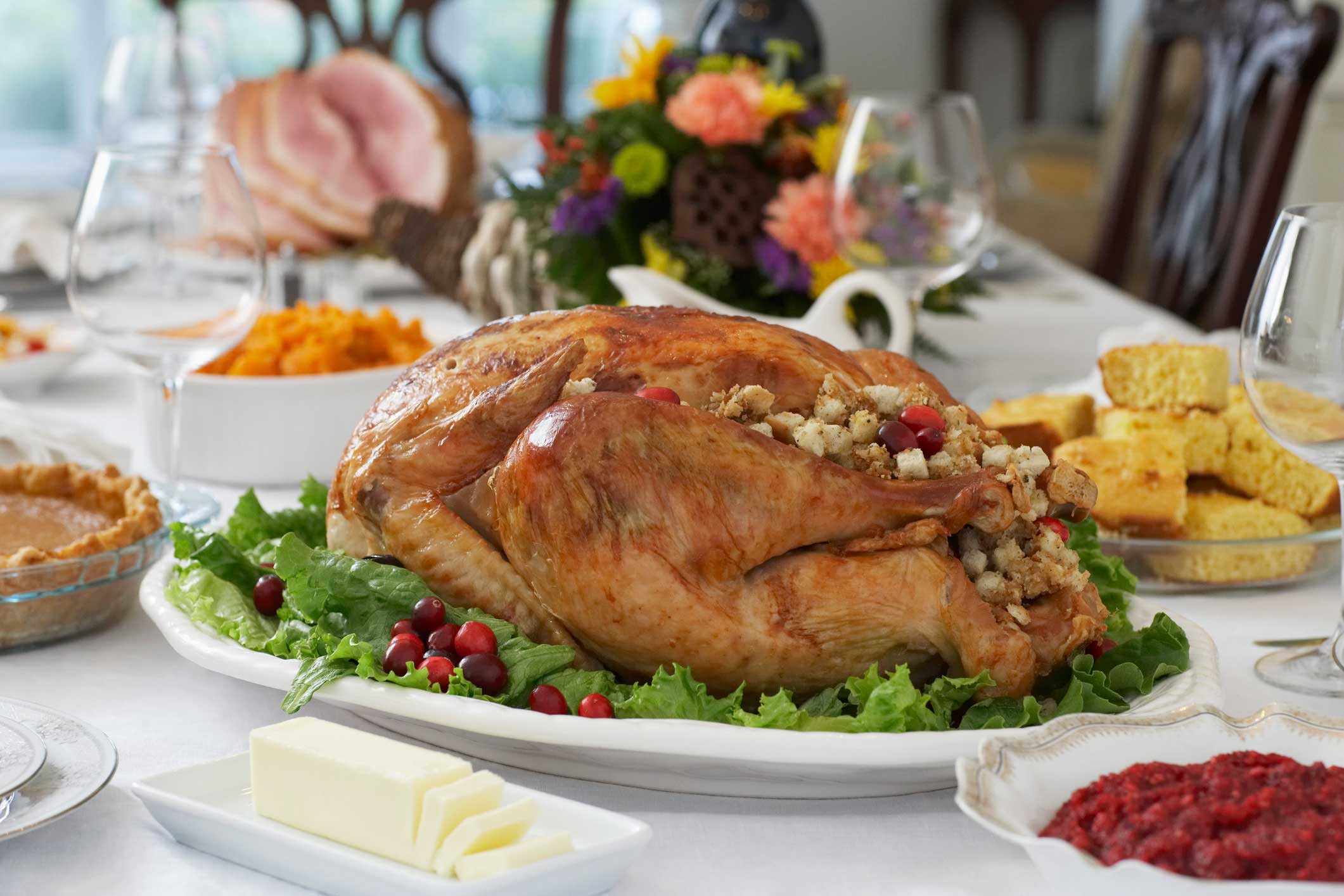
Some of us may have waited an entire year for mom’s mashed potatoes and gravy, but beware. A holiday meal could have over 2,000 milligrams — more than a day’s worth — of sodium.
Too much sodium increases blood pressure, making it harder for the heart to pump. A family member with congestive heart failure already has a weak heart. A high-sodium meal could cause acute symptoms and a trip to the hospital within 12-36 hours.
Here are a few simple steps to reduce sodium at Thanksgiving. I hope it inspires you to grab an apron, crack open that spice cabinet and share the love with lower-sodium holiday meals for years to come.
Skip the brine. Read the fine print on the nutrition label and avoid turkey that has “broth,” “saline” or “sodium solution.” Commercially brined turkey has about 400 milligrams of sodium in three ounces and a fully cooked bird has even more. The same amount of unseasoned turkey has less than 100 milligrams of sodium. Tip: An oven bag will ensure that your bird comes out tender and juicy without the brine.
Make traditional stuffing healthier. Choose a stuffing mix that has 300 milligrams or less of sodium per serving and prepare it with low-sodium broth and unsalted butter or olive oil. Skip the salt and add layers of flavor with fresh produce, herbs and spices. A tray of roasted vegetables can stretch the recipe enough to cut the sodium per serving in half. Then add color and sweet-tart flavor by folding in one or more of the following: apples, citrus zest, dried cranberries and orange segments.
| The Dish on Sodium: How It all Adds Up | |||
| Traditional Meal | mg | Lower Sodium | mg |
| Turkey, brined, 3 ounces | 400 | Turkey, without brine, 3 oz | 100 |
| Stuffing, package mix, 1/2 cup | 600 | Lower-sodium stuffing mix, 1/2 cup | 250 |
| Instant mashed potatoes, 1 cup | 450 | Baked potato with herbs and olive oil | 17 |
| Turkey gravy, canned, ¼ cup | 336 | Turkey gravy, homemade, 1/4 cup | 100 |
| Pumpkin pie, commercial, 1 slice | 350 | Mini Pumpkin Pies, 1 pie | 95 |
| Total: | 2136 | Total: | 562 |
What if the recipe calls for sausage? To significantly reduce calories, fat, and sodium, choose turkey or chicken sausage and use half the amount called for in the original recipe.
When it comes to potatoes, keep it REAL. Instant potatoes are high in sodium and also contain unhealthy hydrogenated oils. To make flavorful, low-sodium potatoes in minutes: microwave Yukon Gold Potatoes until tender (6-8 minutes), mash with whole milk (instead of cream) and flavor with garlic powder, onion powder or roasted garlic and chives (instead of salt).
Homemade gravy. One-quarter cup of canned gravy has over 300 milligrams of sodium. You can save at least 200 mg of sodium by making it from scratch. Add flavor with herbs and spices, such as black pepper, basil, garlic, onion, oregano, sage, thyme and white pepper.
Be portion-size wise. Serve stuffing and mashed potatoes with an ice cream scoop to keep portion size right. If you want more stuffing it is best to skip other starchy side dishes that are also typically high in sodium, such as dinner rolls and mashed potatoes.
Take the time to enjoy the meal. Wait about 15 minutes before going back for seconds because it takes time for stomach hormones to tell the brain that we are full.
Make it mini! A commercial pumpkin pie can have as much as 300 calories and 350 mg of sodium in one slice. Swap this for a tray of mini desserts so you can savor the flavor of the holiday season with less calories and sodium. An easy way to make a traditional pie mini is to bake it in a sheet pan and serve two-inch squares. Another option is peruse the freezer isle in search of mini filo shells. Two mini filo shells have just 30 calories and 25 milligrams of sodium and, because they only hold about a tablespoon or two of pie filling, your guests can sample a few mini desserts without feeling guilty.
Brenda Viens is a registered dietitian at Backus Hospital and Thames Valley Council for Community Action. Have a question for Brenda? Email her at Brenda.Viens@hhchealth.org.