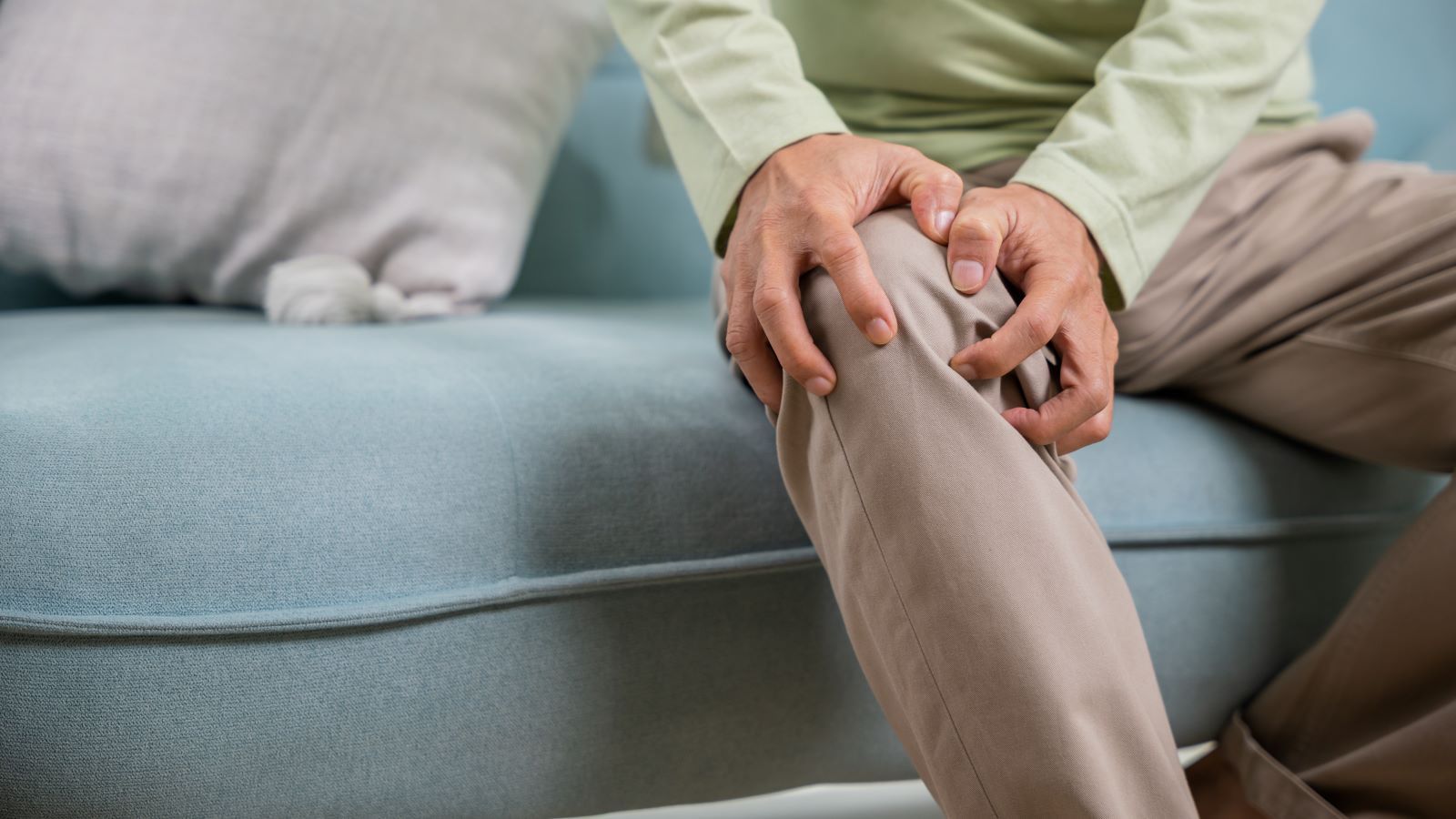

A sore knee after a long day is one thing. But pain that keeps coming back is another.
If your knee pain feels persistent, stiff or harder to ignore, arthritis could be the reason.
“Knee arthritis is one of the most common causes of joint pain, especially as we age,” says Mark Fletcher, MD, a joint replacement surgeon with the Connecticut Orthopaedic Institute. “But the signs can be subtle at first, so it’s important to know what to look for.”
Here are six clues your knee pain could be arthritis, and how to take the next step.
1. Your knee feels stiff in the morning
If your knee is tight or is hard to move when you first wake up, arthritis might be the reason. This kind of stiffness usually eases once you start moving, which makes it tempting to ignore.
“If you have morning stiffness that lasts more than 30 minutes, it’s a classic symptom we look for,” says Dr. Fletcher. “While it usually improves as the day goes on, it tells us inflammation is there.”
> Related: Why Your Knee Pain Gets Worse as You Age
2. There’s swelling around the joint
Swelling is one of the body’s ways of reacting to joint inflammation – and it’s common with arthritis. With arthritis, that inflammation can cause fluid to build up around the knee.
“If your knee looks puffy or feels warm, especially after activity, that’s a clue,” Dr. Fletcher says.
> Related: 5 Ways to Protect Your Knees as You Age
3. Activity makes the pain worse
With arthritis, the cartilage that cushions your knee gradually wears down. That means movement can increase friction inside the joint, leading to more pain the longer you stay active.
“You might notice pain when walking, climbing stairs or standing for long periods,” says Dr. Fletcher. “It typically eases with rest.”
> Related: Can Exercise Prevent Arthritis?
4. You feel (or hear) grinding or popping
That crunching or grinding when you move your knee? It could be crepitus – another arthritis clue.
“Crepitus happens when cartilage wears down and bone starts rubbing against bone,” Dr. Fletcher explains. “It can feel or sound like popping, clicking or grinding.”
Want a Weekly Dose of Health News?
5. You can’t move your knee like you used to
Arthritis can slowly limit your range of motion. You may notice it’s harder to fully straighten your leg, squat down or bend your knee the way you once could.
“If your knee feels stiff or locks up at times, that’s something we want to evaluate,” says Dr. Fletcher.
> Related: Not Sure What’s Causing Your Knee Pain? Here Are 3 Clues
6. Your knee looks or feels different
As arthritis progresses, the shape and alignment of the knee can change. You may notice bony bumps around the joint, tenderness along the sides or a feeling that the knee isn’t as stable as it used to be.
“Advanced arthritis may cause bowing of the legs or bony lumps around the joint,” says Dr. Fletcher. “These changes can affect your stability, too.”
> Related: 6 Knee Injuries That Can Cause Arthritis
When to see your doctor
If any of these signs sound familiar, don’t wait.
Arthritis is one of the most common causes of knee pain – but with the right treatment, it doesn’t have to slow you down.
“Don’t ignore ongoing knee pain,” says Dr. Fletcher. “The sooner we diagnose arthritis, the sooner we can connect you with the right options like physical therapy, medications and joint injections to help keep you active.”