
If your heels hurt at the end of the day, or even just standing still, it could be more than tired feet.
That nagging pain might be plantar fasciitis, one of the most common causes of heel pain.
“This happens when the plantar fascia – the thick band of tissue that supports your arch – becomes dysfunctional and degenerative,” explains John Dankert, MD, PhD, a foot and ankle surgeon at the Connecticut Orthopaedic Institute.
If you’re on your feet all day, especially on hard surfaces, this might sound all too familiar. Here are signs to watch for, and how to get some relief.
1. Heel pain with your first steps
If your first few steps in the morning feel like you’re walking on broken glass, it’s not just in your head.
“That rough, stabbing pain first thing in the morning is one of the classic signs,” says Dr. Dankert. “We call it ‘first-step pain’ because the plantar fascia tightens overnight, then suddenly stretches when you stand up. You’ll usually feel it on the bottom of your heel.”
It often eases after a few minutes, but tends to come back after long periods of sitting.
> Related: 4 Signs You Could Benefit From Shoe Inserts
2. Pain after rest, not during activity
Plantar fasciitis is a little tricky. It doesn’t always bother you while you’re on your feet. It’s often after you’ve been sitting still that the pain kicks in.
“People are often surprised that the discomfort hits after sitting, driving or even after your workout,” says Dr. Dankert. “That post-activity ache is a big clue, and it tends to come back later in the day once the tissue is irritated again.”
> Related: Can PRP Injections Help With My Joint Pain?
3. Soreness when pressing the heel
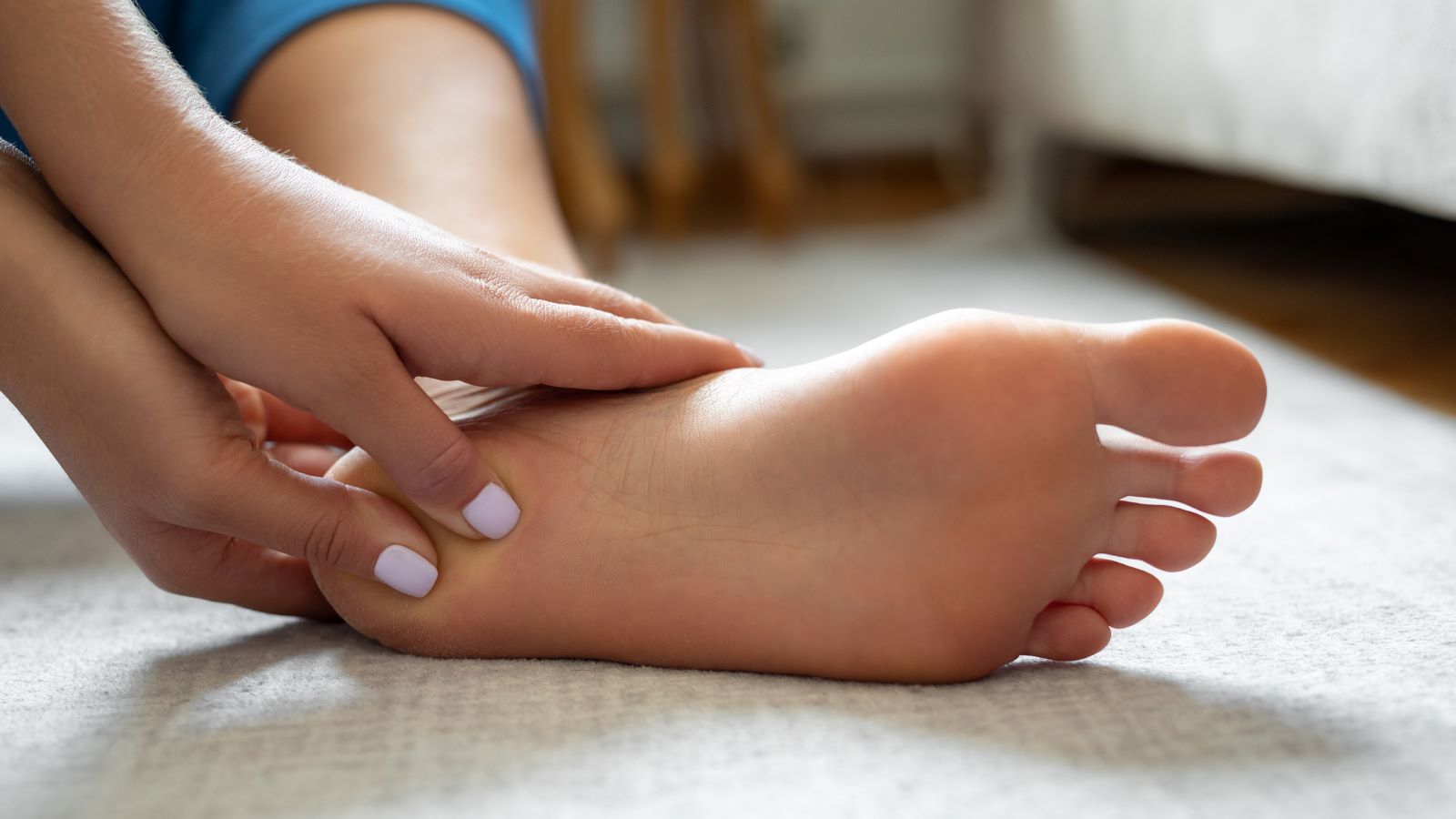
If pressing on the bottom of your heel makes you wince – especially along the inner edge – it could be plantar fasciitis.
“It often feels like a deep bruise,” says Dr. Dankert. “There’s usually a very specific sore spot where the plantar fascia connects to the heel bone, and walking barefoot can really bring it out.”
Want a Weekly Dose of Health News?
4. Tight calves or foot stiffness
That stiffness you’re feeling may not have been the calf raises or how you slept.
“Tight calf muscles and Achilles tendon often go hand-in-hand with plantar fasciitis,” says Dr. Dankert. “Stretching helps, but if stiffness sticks around, it could be adding stress to the plantar fascia.”
Limited ankle flexibility can also shift more stress to the plantar fascia – which may worsen symptoms over time.
> Related: 6 Ways to Strengthen Your Ankles
5. Heel pain that slowly gets worse
Plantar fasciitis doesn’t usually strike all at once. It happens over time.
“It often starts as a mild annoyance and gradually gets worse if nothing changes,” says Dr. Dankert.
Wearing unsupportive shoes, going barefoot on hard floors or ramping up activity without adjusting your footwear can all aggravate it.
“High-impact workouts, extra body weight and jobs that keep you on your feet all day can also raise your risk,” adds Dr. Dankert.
> Related: 5 Worst Shoes for Your Feet
Think you have plantar fasciitis?
Try a few things at home first.
Here’s what Dr. Dankert suggests:
- Wear supportive shoes even at home. (And skip going barefoot!)
- Stretch your calves and toes throughout the day, focusing on eccentric calf strengthening.
- Avoid high-impact activities that strain your feet.
- Ice your heel to ease pain.
- Try orthotics or over-the-counter insoles to cushion your heel.
- Rest when symptoms flare and skip activities that make things worse.
“If heel pain is really bugging you and sticks around for more than a few weeks, come see us,” says Dr. Dankert. “A quick clinical exam is often all it takes to confirm plantar fasciitis – or rule out something else – and come up with a plan that helps.”