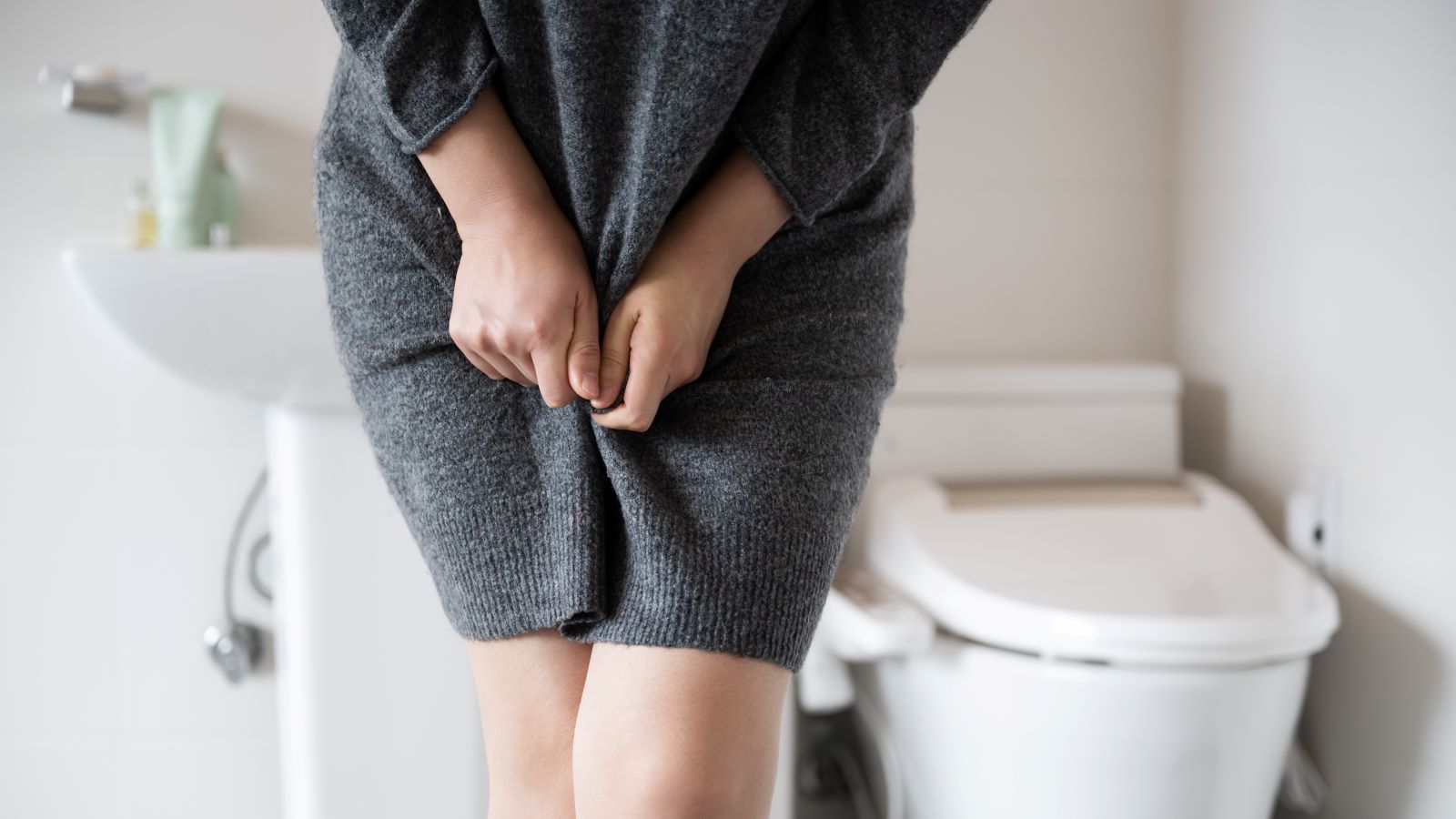

You go to sneeze, and brace yourself. Or maybe you’re halfway through a workout when a jump squat catches you off guard.
If you’ve ever leaked a little during during moments like this, you’re not alone.
“Stress urinary incontinence affects many women, especially after childbirth or as they age,” says Anna Dukhovich, MD, a urogynecologist with the Tallwood Urology & Kidney Institute. “Luckily, it’s very treatable with many options for different lifestyles and symptom levels.”
What is stress urinary incontinence?
Stress urinary incontinence happens when pressure on the bladder – from coughing, exercising or laughing – causes urine leakage. It’s usually tied to weakened pelvic floor muscles or reduced support around the urethra.
“This is different from overactive bladder, which causes sudden urgency,” says Dr. Dukhovich. “Stress incontinence is more about support, which several treatments can help with.”
Here are three treatments for urinary incontinence that actually work.
> Related: Suffering From Urinary Incontinence? Bulkamid Injections Could Help
1. Physical therapy
Pelvic floor physical therapy is often the first step, and it can be a game changer for many women.
“A pelvic floor therapist can help make sure you’re engaging the right muscles,” says Dr. Dukhovich. “You can do exercises like Kegels at home, but early guidance can really help.”
It takes commitment – usually weekly or biweekly visits – and results won’t happen overnight. But for mild to moderate stress incontinence, it can be very effective over time.
Pelvic floor therapy can also help with lifestyle changes. “Small daily habits – like how you lift things – can put pressure on your bladder or pelvic floor,” she explains. “A therapist can help you make adjustments that support healing and reduce strain.”
> Related: Frequent Urination and 5 More Reasons to See a Urogynecologist
2. Urethral bulking
Urethral bulking is a quick, minimally invasive procedure that reduces leaks by injecting a material around the urethra, helping it stay closed during pressure – like when you cough or sneeze.
It’s an option for almost anyone, and there’s little downside to trying it.
“While it doesn’t work for everyone, it can be a great solution for some women,” says Dr. Dukhovich. “We hear how freeing it feels to finally exercise without leaks – or to stop wearing a daily pad.”
Want a Weekly Dose of Health News?
3. Surgery
For some women, surgery offers a long-term solution for stress urinary incontinence – and peace of mind.
“Surgery for stress incontinence is highly effective for appropriately selected patients,” says Dr. Dukhovich.
This option isn’t about how severe your symptoms are – it’s about what works best for your life. “Some women want a one-and-done fix and don’t want to worry about leaks again,” she says.
The success rate is high – around 90% – and recovery involves some downtime. Expect about six weeks of post-op restrictions, including no heavy lifting, intense exercise or vaginal activity.
> Related: 9 Causes of Frequent Urination
When to see your doctor
If leaks are getting in the way of your daily life, you don’t have to just put up with them.
And there’s no one single solution – which is exactly how it should be.
“When we talk through your options, we’ll find what makes the most sense for you,” says Dr. Dukhovich. “It depends on your symptoms, your goals and what works best for your everyday life.”